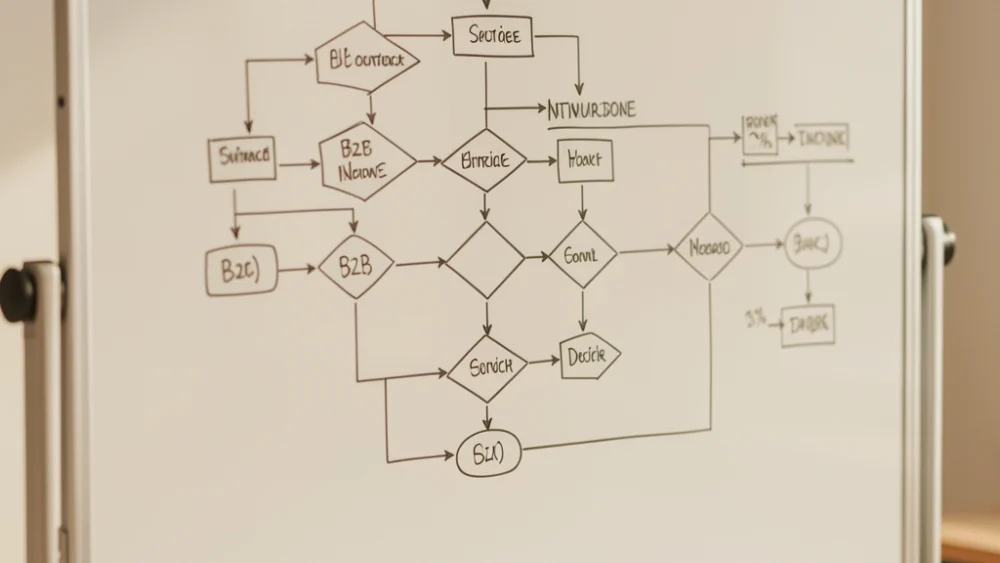
Complex B2B outreach breaks when sequences cannot branch on reply sentiment, meeting booked status, or CRM stage changes. Most platforms advertise "advanced sequences" but meter sends, isolate workspaces by price tier, or lack the infrastructure to maintain placement at volume. This comparison covers what each platform actually delivers for branching logic, agency-scale isolation, and the operational limits that determine whether your sequences execute as designed.
Complex B2B outreach means sequences that change course based on what the prospect actually does. A positive reply triggers a different branch than a soft bounce. A meeting booked pauses the sequence and starts a nurture track. A CRM stage change from "Qualified" to "Opportunity" should rewrite the next three touches. Most platforms sell "advanced sequences" but the logic is shallow, the send limits bind before the branching matters, and the infrastructure cannot maintain placement when volume ramps. This piece compares what each platform actually delivers for operators running multi-client, high-volume, genuinely complex outbound programs.
What Complex Sequencing Actually Requires
Branching logic is only as good as the data that triggers it and the infrastructure that executes it. A sequence that branches on "reply received" needs reply sentiment parsed, not just a boolean flag. A sequence that pauses on "meeting booked" needs calendar integration that actually blocks the next send, not just a manual tag. A sequence that routes prospects to different tracks based on company size or funding stage needs enrichment that runs before the first touch, not after.
The operational requirements stack quickly:
- Conditional triggers that read reply content, not just presence
- CRM bidirectional sync so stage changes in Salesforce or HubSpot rewrite active sequences
- Multi-workspace isolation so one client's reputation collapse does not contaminate another's delivery
- Send volume unbounded by tier so a sequence that performs does not hit a ceiling mid-ramp
- Placement at volume so branching logic actually reaches inboxes to be triggered
Most platforms handle two or three of these. The gap between advertised "advanced sequences" and operational reality is where campaigns break.
Platform Comparison: Sequencing Depth and Operational Limits
| Platform | Starting price | What it is | Where it leaves you exposed | Best for |
|---|---|---|---|---|
| Outreach | No public price | Enterprise sales execution platform with email as one channel among calling, deals, and forecasting | Sold via sales-quoted enterprise contracts and built around a full revenue workflow, not high-volume cold sending on an owned deliverability pipeline | Large sales orgs with SDR teams, forecast requirements, and budget for custom implementation |
| Instantly.ai | $47/mo Growth | Cold email sender with unlimited mailboxes, 450M+ lead database, and AI agents | Connects and warms email accounts you own from any provider, so placement at volume rides on the reputation of those accounts and domains rather than a sending pipeline the vendor owns | Solos and small teams sending under 5,000 emails monthly who want lead data included |
| Smartlead.ai | $39/mo Base | Cold email platform with automatic rotation, warmup pool, and agency workspaces | Sends through Google, Outlook and SMTP mailboxes you buy and connect, so deliverability at scale rides on the reputation of those mailboxes and domains rather than a pipeline the vendor owns | Agencies with moderate volume who can operate on the top tier for API and workspace features |
| Lemlist | $55/user/mo Email plan | Multichannel outreach with LinkedIn, calls, WhatsApp, and built-in warmup | Sends through Google, Microsoft and SMTP senders you connect; lemwarm is included on all plans, but the pricing page states no blocklist monitoring and no inbox placement testing | Teams prioritizing LinkedIn-integrated sequences over pure email volume |
| Woodpecker.co | $7 per 100 contacted prospects/mo | Cold email and LinkedIn outreach with transparent, usage-based pricing | Sends on email accounts you connect or buy as per-address add-ons and meters by prospect contacted; its pricing page states no blocklist monitoring and no inbox placement testing | Small operations with tight lists and low touch counts per prospect |
| SpamCipher | Free to start, scales to unlimited | Cold email sending platform with owned deliverability pipeline, automatic inbox rotation, and built-in warm-up | Requires bringing your own sending infrastructure or using SpamCipher's done-for-you setup rather than connecting existing mailboxes | Agencies and growth teams sending at high volume who need unlimited sends and placement guaranteed by owned infrastructure |
Outreach: Enterprise Sequences with Revenue Workflow Integration
Outreach builds sequences into a full revenue execution platform. On Outreach, as of 2026-08-17, their pricing page lists no public price; everything is quoted by their sales team. This shapes who the platform actually serves: organizations with budget for custom implementation and headcount to justify it.
What Outreach genuinely delivers, per their verified feature list: AI agents for research, personalization and deals; conversation intelligence with transcription and sentiment; deal and pipeline management with win/loss analysis; multi-channel sequences, meetings and task automation; and forecasting with scenario planning on their Pro tier and above.
The sequencing depth is real. Triggers can read call outcomes, email sentiment parsed by their AI, and CRM stage changes. The platform is built for SDRs whose job is to generate qualified pipeline, not for agencies sending cold email at volume for multiple clients. The gap is structural: Outreach is a revenue workflow tool that includes email, not a sending platform that owns deliverability. Sequences execute against connected mailboxes and the reputation of domains you bring. There is no inbox placement guarantee because the platform does not control the infrastructure that determines placement.
Choose Outreach if your operation is a sales organization with forecast requirements, deal stages, and the budget for enterprise software procurement. Do not choose it if you are an agency needing isolated client workspaces, unlimited send volume without tier negotiation, or a placement guarantee backed by owned infrastructure.
Instantly and Smartlead: Where Send Caps Rewrite Your Sequence Design
Instantly.ai and Smartlead.ai both advertise advanced sequences and unlimited mailboxes. The limits sit elsewhere: in sends, contacts, and the features required for agency-scale operation.
Instantly's tier ladder, verified 2026-08-16 from their pricing page, runs three parallel ladders rather than one. On Instantly.ai, the Growth plan at $47/mo includes 5,000 emails monthly and 1,000 uploaded contacts. The Hypergrowth and Lightspeed plans both list at $358/mo, with Lightspeed offering 500,000 emails monthly and 100,000 uploaded contacts. The Bundles layer on lead database credits and AI features with separate meters. The result: three separate meters (credits for enrichment, emails for sending, contacts for list size) can each be the binding constraint.
Smartlead's ladder, verified 2026-08-16, starts at $39/mo Base for 6,000 sends and 2,000 verified prospect emails. On Smartlead.ai, pro at $94/mo raises this to 90,000 sends and 30,000 verified. Unlimited Smart at $174/mo hits 150,000 sends and 50,000 verified. Unlimited Prime at $379/mo reaches 500,000 sends and 170,000 verified. Unlimited email accounts are included on every plan, so the meter is sends and contacts rather than mailboxes.
The operational consequence for complex sequencing: your branching logic is only as good as your ability to reach the inboxes that trigger it. A sequence that performs and ramps volume hits the tier ceiling. The choice becomes pay more, throttle sends, or split the campaign across more mailboxes than the logic was designed for. Both platforms connect and warm email accounts you own from any provider, so placement at volume rides on the reputation of those accounts and domains rather than a sending pipeline the vendor owns.
Choose Instantly if your volume sits under 5,000 sends monthly and you want lead data bundled. Choose Smartlead if you can operate on the top tier for API access and client workspaces, and your volume stays within the verified tier limits.
Lemlist and Woodpecker: Multichannel Depth vs. Email Volume
Lemlist and Woodpecker take different approaches to the same constraint: they meter by something other than raw sends, which shapes what complex sequencing actually costs to execute.
Lemlist's Email plan, verified 2026-08-16, runs $55/user/mo billed annually for 50,000 emails monthly. The Multichannel plan at $87/user/mo billed annually switches the meter to users and caps senders per user at 5. The Enterprise tier is custom for 5+ users needing more than 5 senders per user. The shape matters: cost scales with headcount once a team moves beyond email, and sender count is capped per user on the plan designed for multichannel operation.
Woodpecker has no named tiers. The meter is prospects CONTACTED, not emails sent. On Woodpecker.co, the base rate of $7 per 100 contacted prospects monthly includes 16,000 emails monthly and 4,000 stored prospects. A multi-touch sequence to a small list is cheap; a broad single-touch list is expensive. Almost everything an agency needs sits outside the base rate as a separate add-on: Agency Panel at $27/mo per active client, API and webhooks at $20/mo, extra warm-ups at $5/mo per email account.
Both platforms send through mailboxes you connect. Lemlist includes lemwarm on all plans; Woodpecker includes free warm-up on all plans. Neither pricing page lists blocklist monitoring or inbox placement testing. The sequencing logic in both handles branching on replies and basic CRM triggers. The gap is volume and placement certainty: complex sequences that ramp send volume hit meter ceilings, and neither platform owns the infrastructure to guarantee where messages land.
Choose Lemlist if your sequences require LinkedIn, calls, WhatsApp, and SMS integration and your team size justifies the per-user pricing. Choose Woodpecker if your outreach is low-touch per prospect and you can build the real cost from the add-on structure.
Agency Workspace Isolation: The Reputation Contamination Problem
Complex B2B outreach for agencies means running sequences for multiple clients with different lists, different domains, and different risk profiles. One workspace means one blast radius: client reputations are not isolated from each other.
When clients are folders, tags, or campaigns inside a single tenant, they share settings, sending identity, and often the same connected infrastructure. Reputation attaches to domains, mailboxes, and IPs, not to the folder the campaign lives in. When those are shared, a client with a poor list generates complaints and bounces against infrastructure the other clients are also sending from.
The operator sees this as a campaign that performed last month degrading for no reason visible inside its own account. The cause sits in a neighboring client's list. Diagnosis is slow because the tool presents the clients as separate when the infrastructure is not.
Smartlead offers per-client workspaces with whitelabelling, but only on the Unlimited Prime tier at $379/mo, with three included and additional workspaces at $29/mo each. Woodpecker's Agency Panel is a $27/mo per active client add-on. Instantly's pricing page does not list multi workspace. Neither Lemlist's nor Outreach's pricing pages list it.
Real isolation means separate domains and mailboxes per client, which is operational work the tool is not doing: more accounts to provision, warm, monitor, and bill. For an agency, this is the difference between an incident affecting one account and an incident affecting the book of business. The cost is measured in client trust and recovery time, not just features.
Why Placement Guarantees Require Owned Infrastructure
A tool that sends through mailboxes you own inherits your reputation and cannot promise placement. This is structural, not a feature gap.
The platform hands messages to accounts the customer connects, at Google, Microsoft, or an SMTP provider. Delivery decisions are then made by the receiver, against the reputation of those accounts and domains. Placement is decided by the receiving system using signals the sending tool does not own or control: the history of the sending domain, the IP it egresses from, recipient engagement, and complaint rates. A vendor whose architecture ends at your mailbox has no lever over any of them.
The operator sees this as two customers on the same platform getting very different results from identical campaigns, with neither able to attribute the difference to the tool. The platform's own dashboard reports both as delivered, because the tool's view stops at handoff.
Distinguish DELIVERED from PLACED. Most tools report the former and readers hear the latter. That single distinction explains more operator confusion than any feature comparison.
Improving placement means changing the things the receiver actually scores: list quality, sending pattern, engagement, and the reputation of the domains and IPs in use. Switching tools alone does not move it unless the new tool owns the infrastructure that determines the score.
Worked Example: Designing a Branching Sequence at Agency Scale
On Smartlead.ai, suppose you run an agency with 12 clients, each with 2,000 prospects in active sequences. Your sequences branch on three conditions: reply sentiment (positive, neutral, negative), meeting booked status, and CRM stage change from "Qualified" to "Opportunity." You ramp from 50,000 to 300,000 sends monthly across the book.
On Instantly Growth at $47/mo, you hit the 5,000 email monthly cap in week one. On Instantly.ai, upgrading to Lightspeed at $358/mo removes the cap but you still connect and warm your own mailboxes, so placement variance across 12 client domains determines whether your branching logic ever triggers. Two clients with fresh domains see sequences fail to reach inboxes; the tool reports delivered.
On Smartlead Pro at $94/mo, you have 90,000 sends monthly, covering month one but not the ramp to 300,000. Upgrading to Unlimited Prime at $379/mo gives you 500,000 sends and three client workspaces, but you have 12 clients. Additional workspaces at $29/mo each add $261 monthly, and you still send through connected mailboxes you buy and warm.
On Lemlist Multichannel at $87/user/mo with three users, you have unlimited emails but sender caps per user and per-user pricing that scales with headcount, not volume. The CRM bidirectional sync works, but the cost structure assumes your team grows, not your send volume.
The sequence design is identical across platforms. The operational reality is not: send caps force tier upgrades or campaign splits, workspace isolation requires top-tier pricing or does not exist, and placement variance across client domains means the same sequence performs differently for reasons the platform cannot control.
SpamCipher: Sequences on an Owned Deliverability Pipeline
SpamCipher is the cold email platform for unlimited, automated sending, built for agencies and growth teams that send at high volume. It is the only platform that promises 90%+ inbox placement, because sending, warm-up, verification, and inbox placement all run on one owned deliverability pipeline.
For complex sequencing, this changes what is possible. Send volume is not metered by tier, so a sequence that performs ramps without hitting a cap. Automatic inbox rotation across many sending mailboxes executes branching logic without manual rebalancing. Built-in warm-up on a real seed network runs before you send, so fresh domains do not collapse placement in week three. Email verification and list cleaning built into the send flow means sequences branch on actual replies, not bounces. Inbox placement monitoring and DMARC/blacklist monitoring on the same platform closes the feedback loop: you see placement, not just delivery.
The platform brings its own sending infrastructure or builds and manages it for you. This is the structural difference: placement is determined by infrastructure SpamCipher owns and monitors, not by the reputation of mailboxes you connect from disparate providers. The 90%+ inbox placement SpamCipher stands behind is a claim about that owned pipeline, not an industry statistic.
For the agency in the worked example: 12 clients, 300,000 sends monthly, branching sequences that require placement to execute. No tier upgrades when volume ramps. No per-workspace add-ons for client isolation. No variance across client domains because the infrastructure is common and monitored. The sequence design is the same. The operational constraints are not.
Actionable Tips: Implementing Complex Sequences That Actually Execute
Regardless of platform, complex sequences fail at predictable points. These practices prevent the common failure modes:
- Design triggers before content. Map the branching logic on paper first: what data changes, where does it come from, what happens next. Most "advanced sequence" failures are data flow failures, not content failures.
- Test the negative case. Every branch needs a fallback when the trigger data is missing, malformed, or arrives late. Sequences that assume clean data break on real lists.
- Monitor placement, not delivery. Your platform reports messages handed to the receiving system. That is not where they land. Use list cleaning practices to keep placement high enough for triggers to fire.
- Isolate by infrastructure, not by folder. True client separation requires separate domains and mailboxes, not separate campaigns in the same tenant. Budget for the operational overhead or accept the reputation contamination risk.
- Ramp volume before adding complexity. A sequence with six branches that collapses at 10,000 sends teaches you nothing about whether the branches work. Prove placement at volume, then add logic.
For teams running multichannel sequences with calling, the same principle applies: integrate the channels after the email foundation is stable, not as a workaround for email placement problems.
Frequently asked questions
See where your domain stands
Run the free SpamCipher check and see exactly which authentication and reputation gaps apply to your sending domain.
Get started free