
Every guide about how to monetize your email list promises passive income; almost none of them mention that monetization is a withdrawal from an account you have to keep funding. A list makes money exactly as long as people keep opening it, which means the craft is not picking a revenue model, it is running one without burning the trust that makes the model work. This guide ranks the four real models by revenue per subscriber and by the list size each actually requires, then covers the two disciplines the income depends on: the trust budget and the deliverability floor. We are SpamCipher, AI sales engagement, lead intelligence, deliverability and email security in one platform, with email validation and inbox placement testing on our own seed network; monetized lists are precisely the lists that cannot afford to lose the inbox, which is why this topic is ours.
The math of list value
Before any model, fix the metric, because the wrong one distorts every decision downstream. The number that matters is revenue per subscriber per year: everything the list produces, divided by the people actually on it. Not list size, not open rate, not the revenue headline. Revenue per subscriber is what tells you whether a monetization change worked, whether a growth channel pays for itself, and what one more real subscriber is worth to you in dollars, which in turn tells you what you can rationally spend to acquire one.
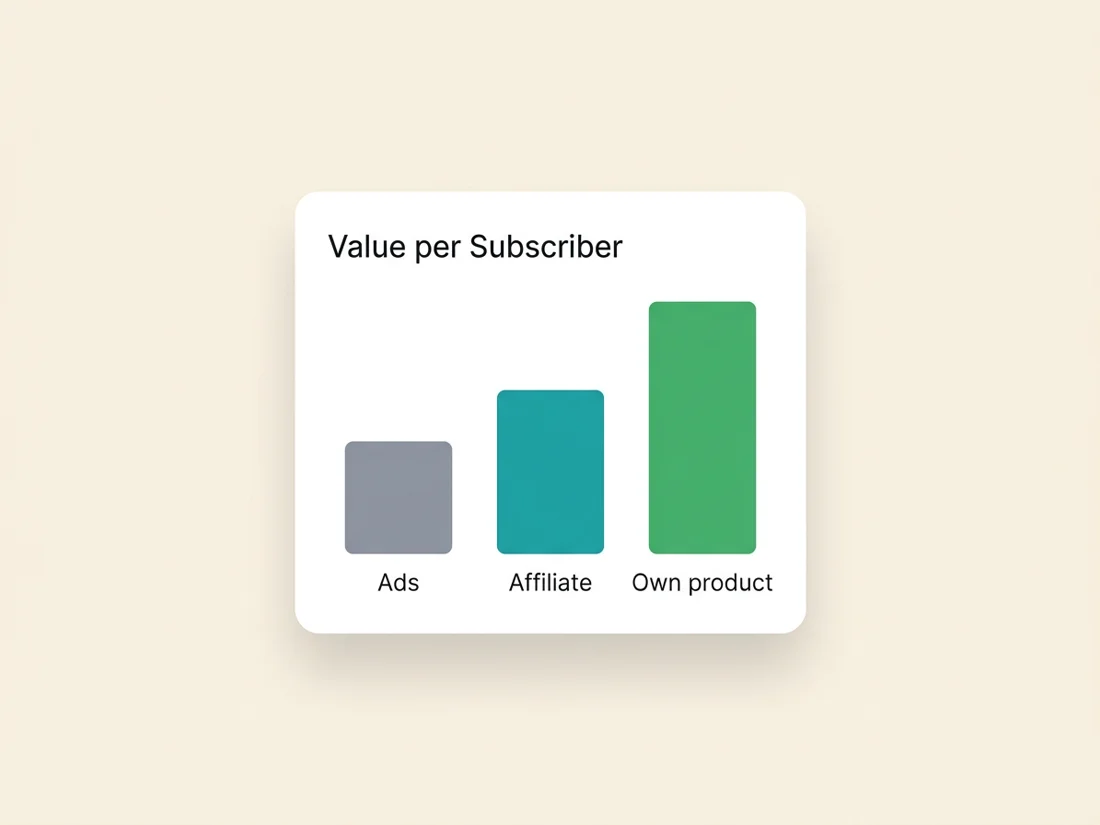
Two properties of this metric surprise people. First, it is brutally sensitive to list quality: a 10,000-subscriber list where 4,000 are silent produces the revenue of a 6,000-subscriber list while paying costs on 10,000, so the fastest "monetization" improvement many senders can make is the unglamorous hygiene work of managing decay and sunsetting the dead. Small engaged lists reliably out-earn big tired ones per subscriber, and often in absolute terms. Second, the metric varies enormously by model: the same thousand readers might be worth a few dollars a year to an ad seller and a few hundred to someone selling their own product. That spread is the entire argument of the next section.
Run the arithmetic on your own list before choosing anything, because it converts vague ambitions into decisions. Suppose 2,000 subscribers, of whom 1,200 engage. An ad-rental model at typical small-list rates might produce a few hundred dollars a month at best, and only once sponsors return calls at your size. The same 1,200 engaged readers buying a $150 workshop at a modest 3% conversion produce over five thousand dollars in a single launch, repeatable a few times a year with different offers. Neither number is a promise; both are the kind of estimate five minutes with your own figures makes concrete, and the exercise almost always points the same direction: at small and medium size, serve the audience directly, and let rental models wait for scale.
The four ways to monetize your email list
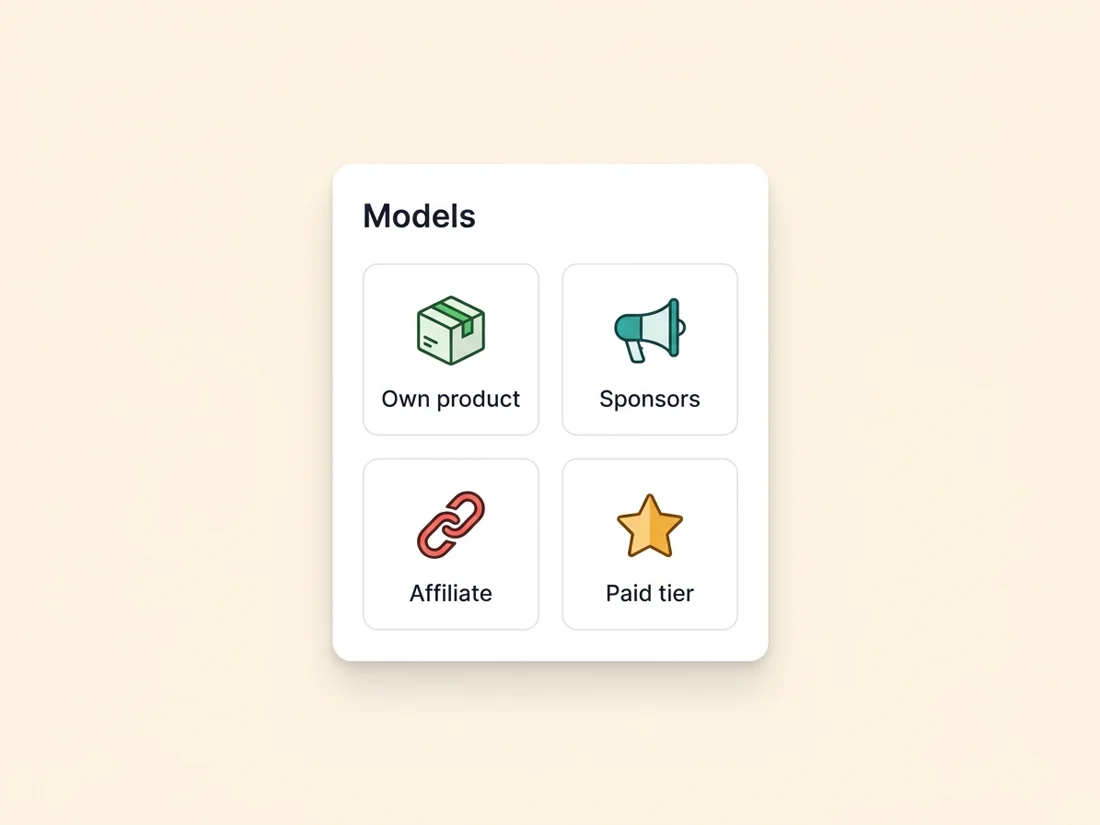
Four models cover essentially every legitimate way a list produces money. Ranked from highest revenue per subscriber to lowest, which is also, not coincidentally, from most to least ownership of the relationship.
1. Your own products and services. Courses, templates, software, consulting, workshops, books: anything you make and sell directly. This is the highest-value model per subscriber by a wide margin, because you keep the whole margin and the offer can match the audience perfectly, and it is the only model that works from tiny lists: a few hundred genuinely interested subscribers can support a real launch, since even single-digit conversion on a relevant offer produces meaningful revenue when the price is yours to set. The operational requirement is honest: you have to build something worth buying, and the list's job is to teach you what that is. Your subscribers' replies and questions are a product-research channel most founders pay for and newsletter writers get free.
2. Affiliate recommendations. You recommend someone else's product and take a commission. Done well, this is a service to the reader: you filter the market and vouch only for what you would use, with disclosure, and the commission compensates the curation. Done badly, it is the fastest trust-burner in email: irrelevant offers, undisclosed incentives, or a cadence where every issue sells something. The rules that keep it working: recommend only what fits the audience's actual problems, disclose the relationship plainly (legally required in most jurisdictions, and the disclosure costs you nothing with readers who trust you), and cap the share of affiliate content well below your value content. List-size threshold: works from roughly a thousand engaged subscribers, because commissions are a percentage of conversions and conversions need volume.
3. Sponsorships and ads. A sponsor pays for placement in your issue: a classified, a featured blurb, a takeover. This is the classic newsletter business model, and its economics are rental economics: sponsors pay per thousand impressions, so the model needs scale before the checks matter, typically several thousand engaged subscribers before sponsors take the call, and meaningfully more before it resembles income. Rates vary widely by niche (a B2B audience with buying power commands multiples of a general audience), so treat any specific CPM figure you read as a rumor about someone else's niche. Operationally, sponsorship means running a small ad-sales function: a rate card, a sponsor pipeline, editorial standards for what you will and will not run, and the discipline to reject money that does not fit the audience, because one wrong sponsor reads as an endorsement and spends your credibility.
4. A paid tier. The premium newsletter, the members-only section, the paid community. Highest commitment asked of the reader, and the conversion honesty most guides skip: paid tiers typically convert a low single-digit percentage of an engaged free list, which means the model needs either a large free list or an audience with unusual willingness to pay (professional traders, niche practitioners, people whose employer expenses it). The free tier also has to stay genuinely good after the paywall exists, or the funnel that feeds the paid tier starves. Works best when the paid layer is a different product (depth, data, access, community) rather than the same product with the good parts removed.
Choosing your model (and sequencing them)
The decision is mostly made for you by three facts about your situation: list size, niche buying power, and what you are able to build.
- Under ~1,000 subscribers: your own product or service is effectively the only model with real numbers, and that is good news, because it is also the best one. Use the small-list advantage: reply to everyone, learn the problems, and build the first offer from the questions your welcome sequence collects (the ask-a-question move from our welcome email guide is product research in disguise).
- 1,000-5,000: own product remains primary; relevant affiliate recommendations become a sensible secondary once you have standards for them. Sponsors are possible in high-value niches but you are negotiating from the small end of the table.
- 5,000+: all four models are open, and the real question becomes portfolio design: most durable newsletter businesses run a primary (own product or sponsorships) plus one secondary, because every additional simultaneous model adds asks to the same trust budget.
- Niche beats size at every tier. A thousand procurement managers out-monetize fifty thousand general readers in any model that involves purchasing decisions. If you are pre-launch, this is an argument for building the narrow list, covered in how to build an email list from zero.
Sequence rather than stack: launch one model, run it until it is boring, then add the second. The lists that die are the ones that turn on all four at once the month they decide to "monetize."
One test settles most model debates: would the commercial element survive being announced honestly? "I built a course on exactly the problem you subscribed to read about" survives easily. "Today's issue is sponsored by a tool I use" survives. "Here are five affiliate links to products I have never touched" does not, and neither does a paid tier whose pitch is that the free tier is now deliberately worse. If the honest announcement of the model would embarrass you, the model is wrong for your list, whatever its spreadsheet says.
The trust budget
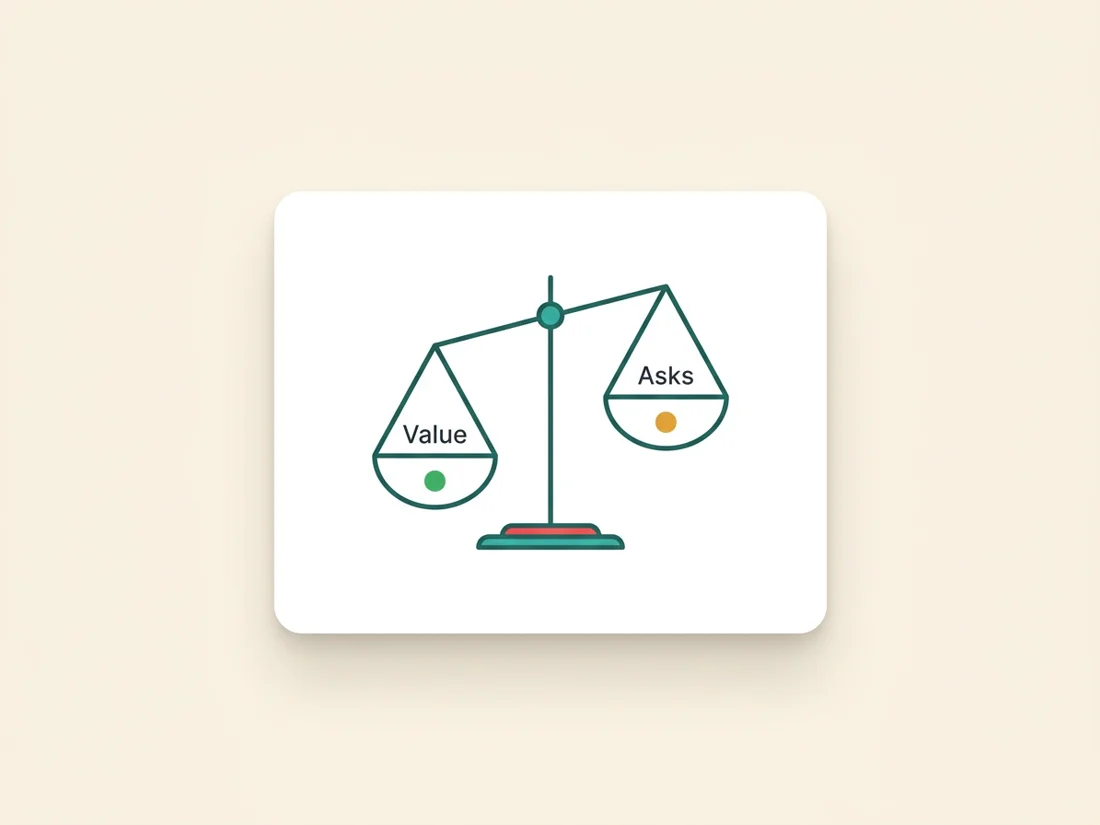
Here is the model that keeps the money flowing: every issue either deposits trust (genuinely useful, no ask) or withdraws it (a pitch, a sponsor, a paywall reminder). Readers do not track this consciously; they track it perfectly in behavior, opening a little less readily after each withdrawal that was not covered by deposits. The working ratio is the 70/20/10 discipline from our email-types guide: roughly 70% pure value, 20% value with a soft commercial element, 10% direct ask. Monetization fits inside that budget, not on top of it.
Overdraw the budget and the account does not close loudly, it decays quietly: opens sag, the unsubscribe trickle becomes a stream, and the silent majority stops reading without telling you, which is the soft-decay spiral from the list decay playbook. The insidious part is that over-monetization looks profitable while it is happening, because revenue is measured this quarter and audience erosion is measured next year. The senders who make money for a decade all run the same defense: a fixed cap on commercial content, watched as closely as the revenue line itself.
You cannot monetize your email list from the spam folder
Every model above multiplies one number: how many subscribers actually see the email. A monetized list that slips from the inbox to spam takes an immediate, unbudgeted revenue cut, which makes deliverability the floor the whole business stands on, and monetized senders face three specific pressures on it.
- Commercial content is exactly what filters scrutinize. Affiliate links to third-party domains, sponsor copy written by someone else, promotional language and urgency: these are the patterns in the content mistakes that send you to spam, and a monetized issue carries more of them by construction. Defenses: link to your own domain and redirect from there where appropriate, rewrite sponsor copy into your own voice, and keep the commercial share of each issue inside the trust budget, which conveniently is also the filter-friendly share.
- Monetization pressure fights hygiene pressure. Every sunset of silent subscribers shrinks the number you quote to sponsors, so ad-funded senders are structurally tempted to keep dead weight. Resist it: sponsors are buying engaged attention, your engagement rates are part of your rate card, and a padded list eventually shows up as the falling opens that renegotiate your rates downward anyway.
- The stakes rise with the revenue. A hobby list in the spam folder is a disappointment; a monetized one is a payroll problem. That is the point at which validation before sends, engagement-based sunsetting, authentication kept at enforcement, and placement measured with real seed accounts stop being best practices and become revenue protection, the same pipeline discipline in Email Validation and the seed-based placement tests we run.
One habit covers most of the commercial-content risk: vet every third-party domain before it ships. Check the sponsor's or affiliate program's landing domain against the blacklists, load it yourself, and confirm where its redirects actually terminate, because your issue inherits the reputation of everything it links. A five-minute check per new partner is cheap insurance on an asset that took years to build, and declining one poorly-hosted sponsor is easier than explaining a placement collapse to the others.
Building toward money from day one
If the list is young or not yet started, monetization is mostly decided before the first dollar: by acquisition quality (readers, not addresses), by the segmentation signal you capture at signup (which later becomes offer targeting), by the welcome sequence that sets the value-first expectation, and by the hygiene habits that keep revenue per subscriber computable at all. None of this delays monetization; it is what makes eventual monetization work on the first attempt instead of the third.
Two legal notes belong in every plan, and both are cheap to honor. Disclose commercial relationships: affiliate links and sponsored placements need plain-language disclosure (regulators require it, and readers reward it). And the unsubscribe stays sacred: monetization does not change a single compliance obligation, and a paid subscriber who wants out of marketing mail is still entitled to be out; the rules from our compliance guide apply to money mail hardest of all.
The honest summary: a list is a trust asset that can be rented out (ads, affiliate) or served directly (products, paid tiers), the direct models pay more per reader at every size, and every model's ceiling is set by how many inboxes you actually reach. Keep the trust budget solvent, keep the placement measured, and the list becomes what the hype promised after all: an asset that pays you for being useful. That last mile, the reaching of inboxes at scale, is where SpamCipher's validation, warm-up and inbox placement tests come in; monetize on that floor and the revenue math finally holds.
Protect the list that pays you
Validated subscribers, engagement-honest hygiene, and placement measured with real seed accounts, so every model above multiplies a number you can trust. Unlimited sending on SpamCipher ONE, with every mailbox kept inside its own daily cap, and inbox placement tested on seed mailboxes.
Check your list's health