
A blacklisting announces itself the worst way possible: bounces spike, replies stop, and somewhere a rejection notice mutters "blocked using" followed by a hostname you have never heard of. Email blacklist removal is very learnable, but almost everyone attempts it in the wrong order, firing off delisting requests while the cause is still live, which is how one bad week becomes a bad quarter. This is the full playbook in the right order: confirm what you are actually on and whether it matters, fix the root cause, then request removal the way each operator expects, and ramp back carefully. We are SpamCipher; our blacklist monitoring watches domains and sending IPs, alerts on a listing and guides delisting until it clears, which is exactly why we know what to do when someone arrives needing this article.
Email blacklist removal starts with triage
Before touching any removal form, establish three facts, because each one changes the plan.
First: are you actually listed, and where? Run your sending IPs and your domain through a multi-list lookup (dozens of public blocklists can be checked in one pass; our blacklist monitoring guide covers the tooling). Do not diagnose from one bounce message alone: a single provider block is not the same as a blacklist entry, and plenty of "we are blacklisted" panics turn out to be a content filter or an authentication failure, which have entirely different fixes covered in email deliverability problems.
Your fastest triage input is sitting in your own bounce log. Rejection messages routinely name their source: phrases like "blocked using" or "listed at" followed by a list hostname tell you exactly which operator is refusing you, and the SMTP code around them tells you how hard the refusal is. Pull the last few days of rejections, group them by the hostname they cite and by receiving provider, and you frequently have the complete map (which list, which providers consult it, when it started) before running a single external lookup. A listing that appears in the lookup tools but never once in your bounces goes straight into the "probably does not matter" pile from the previous paragraph.
Second: is it the IP or the domain? The distinction changes everything. An IP listing points at infrastructure: your server, your shared pool, or a compromised machine sending through it. If you send from a shared ESP pool, an IP listing may not even be about you, and the fix runs through your provider. A domain listing is personal: the operator concluded that mail bearing your domain is spam, which almost always traces to your list quality or sending practices, and no infrastructure change will outrun it.
Third: does this list even matter? Honest answer: most do not. A handful of operators feed the filters of major providers and security gateways; a listing there measurably moves your delivery. Beyond them sits a long tail of small and legacy blocklists that almost nothing consults, and senders burn days chasing removals that would change nothing. The practical test is correlation: if your bounces and placement dropped when the listing appeared, it matters; if you only discovered it through a scanning tool and your metrics are flat, note it, fix any real cause it hints at, and spend your energy elsewhere.
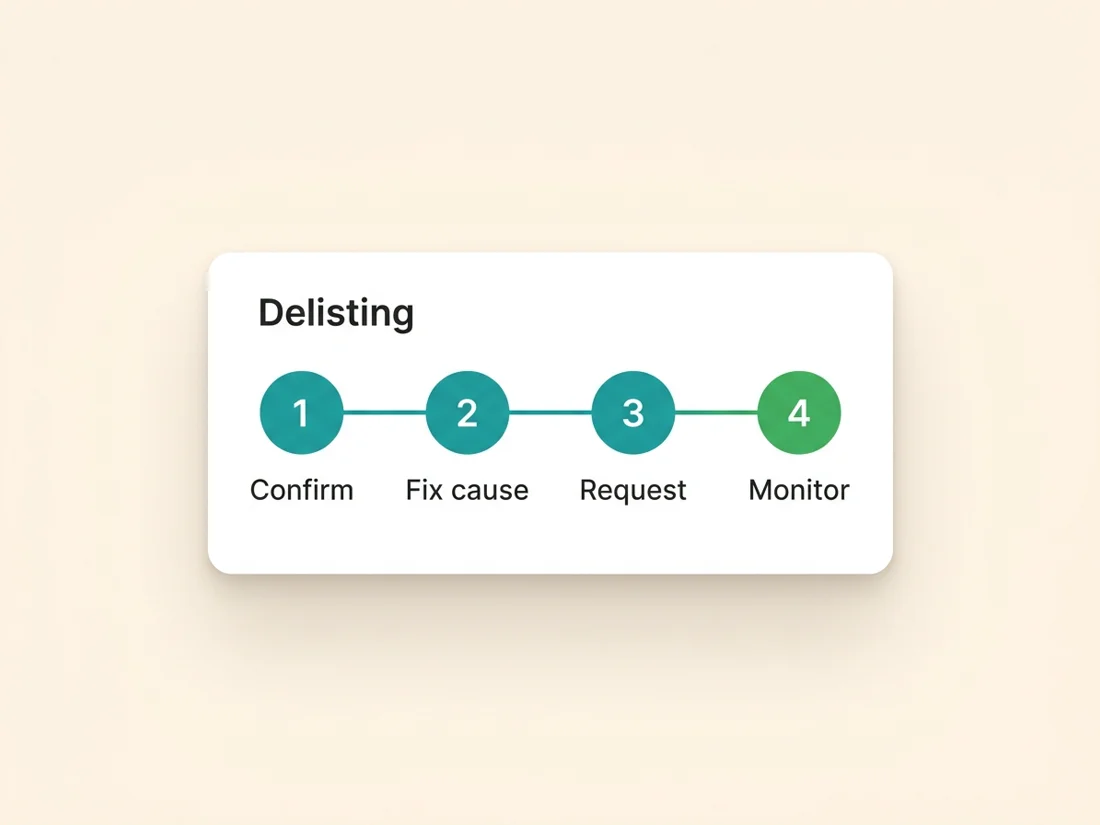
The iron rule: fix the cause first
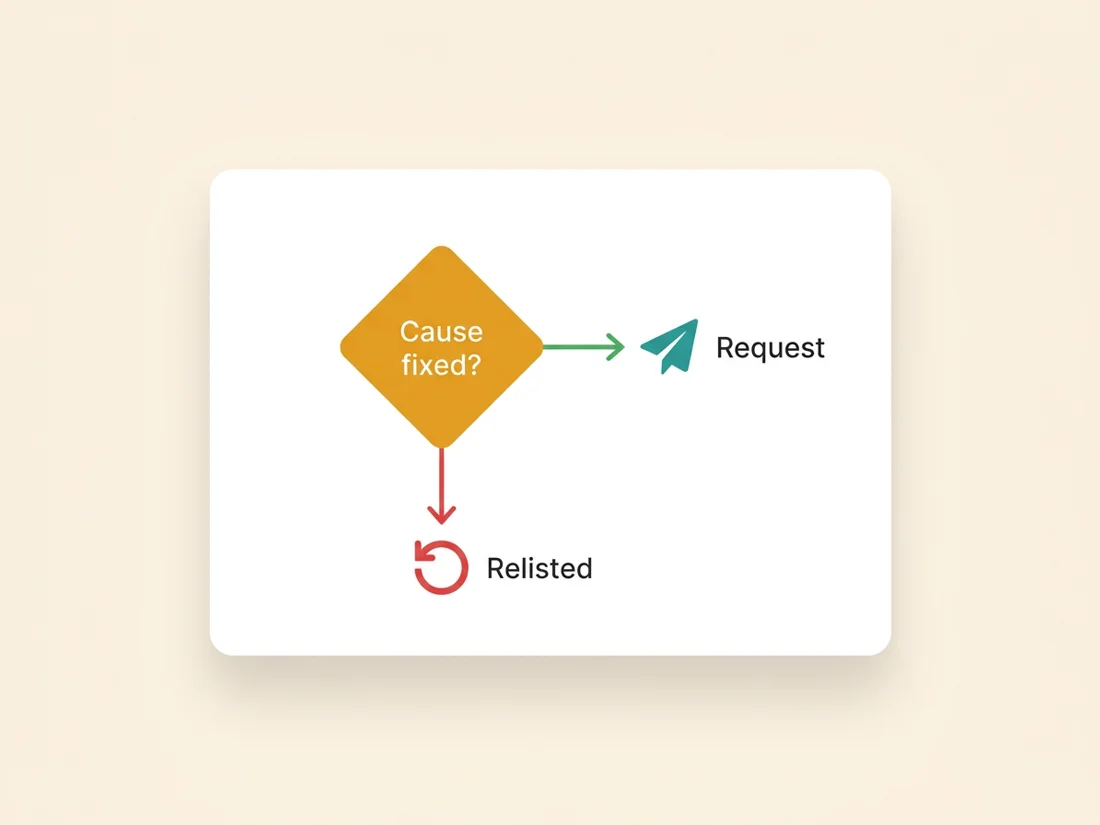
Here is the rule that separates delistings that stick from delistings that boomerang: you do not request removal until the behavior that caused the listing has stopped. Blocklists are automated detection systems. Delist while the cause is live and the next spam-trap hit or complaint burst relists you within days, except now the operator's system has seen you twice, some lists escalate repeat entries to longer or manual-review-only removals, and your future requests carry the credibility of a boy who cried clean.
So play detective before playing applicant. The listing type itself is the first clue: a trap-driven listing means your list contains recycled or pristine spam traps, which means it has been neglected long enough for decay to mature into ordnance, and the fix is a full validation pass plus a sunset policy. A complaint-driven listing points at consent and expectation problems: purchased segments, surprise frequency, buried unsubscribes. A listing that names malware, botnets, or an exploited host (common on infrastructure-focused lists) usually means a compromised mailbox, leaked SMTP credentials, an open relay, or a hijacked web form silently sending spam from your systems, and until you rotate credentials and close the hole, nothing else you do matters. Read your bounce logs, check every sending system you own including the forgotten WordPress contact form, and only when you can write one sentence describing what happened and one describing what you changed are you ready for step three.
One complication deserves its own paragraph: shared responsibility. If you send through an ESP's shared pool, a platform, or an agency, the listing may straddle a boundary: their infrastructure, your behavior, or a pool neighbor's sins. The division of labor is clean once stated: infrastructure listings on shared IPs are the provider's to resolve (and a provider who shrugs at a chronically listed pool is telling you something worth hearing, per the vendor test in our deliverability-problems guide), while domain listings are yours regardless of whose servers carried the mail. Loop the provider in early either way; the good ones have delisting relationships and postmortem data you do not, and the removal request often lands better coming from the party the operator already knows.
The three kinds of removal
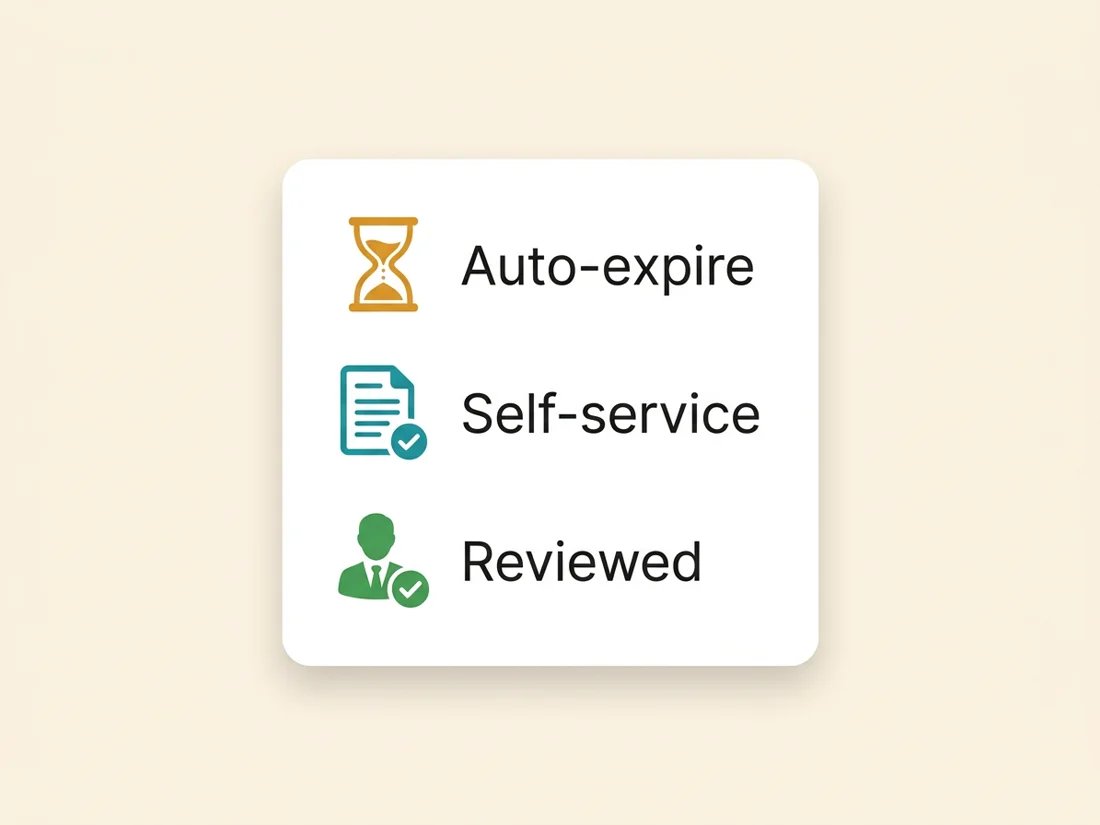
Every blocklist resolves entries through one of three mechanisms, and knowing which you are dealing with sets your expectations and your effort level.
- Auto-expire lists drop entries automatically once the offending signal stops: no form, no request, just clean behavior and a timer, typically hours to a few days. For these, the removal request IS the fix; your only job is stopping the cause and waiting.
- Self-service lists offer a lookup page where you find your entry and submit a removal request, sometimes with a checkbox attestation, processed automatically or near-automatically. Fast when your reputation signals already look clean, and repeat offenders may find the self-service door progressively less friendly.
- Reviewed lists put a human or a stricter system between you and removal: they want to see what happened, what you fixed, and why it will not recur. Slower, but these tend to be the operators whose listings matter most, so the effort is proportionate.
Email blacklist removal, operator by operator
The operators you are most likely to actually need, and how each one thinks. (Processes evolve, so treat this as the map and each operator's own site as the terrain.)
Spamhaus is the listing that matters most, because major providers and gateways genuinely consult it. Its ZEN zone aggregates several lists with very different meanings: SBL is classic spam-source listing (behavioral, take it seriously), XBL flags exploited machines (a compromised host or account, so your fix is security, not marketing), and PBL is not an accusation at all, just a policy statement that a given IP range should not send direct mail (common when you try to send from residential or generic cloud space; the fix is sending through proper infrastructure, not a removal plea). Identify which zone you are in through their lookup portal, fix accordingly, then use the same portal to request removal; SBL-class entries get reviewed, and arriving with the cause demonstrably fixed is the whole game.
Barracuda runs a reputation-based list consulted by its widely deployed corporate appliances, with a self-service removal request form. Clean up first, request once, and be patient rather than resubmitting hourly; repeat spam signals after removal make subsequent requests harder.
SpamCop is largely self-healing: listings are driven by user reports and trap hits, and entries age out on their own, roughly a day after the reports stop. If SpamCop keeps you listed, the message is not "the form is broken," it is "you are still doing it."
The legacy tail (older lists of fading relevance, some effectively unmaintained) deserves proportionate effort: if a defunct list has no working removal process and no measurable impact on your delivery, document it and move on rather than tithing your week to a ghost.
Microsoft is not a blacklist, but blocks like one. Outlook and Microsoft 365 run internal reputation systems; when they block you, the path is their sender support process (a mitigation or delisting request explaining your fix) plus enrolling in their sender tools to watch your standing going forward. Expect the block to lift gradually rather than instantly, and expect volume history to matter.
Gmail has no public blacklist at all. There is no form, no lookup, and no shortcut: Gmail placement is pure reputation, rebuilt the same way it was built, through authenticated, wanted mail at steady volume. If your crisis is specifically Gmail, the playbook is the deliverability rebuild, not a removal request, and pretending otherwise wastes exactly the weeks you cannot spare.
The request itself, and honest timelines
For reviewed removals, the request that works is short, factual, and adult. Three sentences carry it: what happened ("a lapsed list segment containing recycled traps was mailed on the 12th"), what you fixed ("the segment was purged, the full list re-validated, and validation is now enforced before every send"), and what prevents recurrence ("automated monitoring and a quarterly re-validation cadence are in place"). No blame-shifting onto a contractor, no volume of apology, no legal bluster; operators read hundreds of these and reward the ones that sound like a sender who understood the problem. Attach nothing they did not ask for.
And a caution about the cottage industry that grows around panic: paid "guaranteed blacklist removal" services sell you a form submission you could file yourself in five minutes, cannot fix your root cause, and cannot influence reviewed operators, who explicitly disregard third-party pressure. The legitimate ones do diagnosis and remediation consulting, which has value; the ones promising removal itself for a fee are selling weather control. Every operator that matters processes removals free of charge, directly from the affected sender.
Timelines, honestly: auto-expire entries clear in hours to days once you are clean; self-service removals commonly process within a day or two; reviewed removals run from a couple of days to a few weeks depending on operator load and your history. Two rules keep you sane: never spam the removal process itself (duplicate requests slow you down and mark you as exactly the kind of sender they suspect you are), and track the listing daily so you know the moment status changes rather than discovering it in next week's bounce report.
After delisting: the recovery ramp
Delisting restores your right to deliver, not your reputation, and the worst move on day one of freedom is resuming full volume, which reads to every filter like the relapse it might be. Treat the return like a mini warm-up: start with your most engaged segments (the recipients whose opens and replies vouch for you), at a fraction of normal volume, and step upward over one to two weeks while watching bounces, complaints, and placement at each step, the same ramp discipline from warming new domains. Positive engagement during this window actively repairs the reputational damage the listing period caused; a blast to the full stale list actively re-argues the operator's original case. Write the postmortem while it is fresh, too: one page recording what listed you, what fixed it, and the dates, because the sender who faces a reviewed removal a year later with a documented history of one resolved incident reads very differently from the sender reconstructing events from memory.
And then make the whole category structural, because the honest conclusion of every delisting story is that the listing was the last symptom, not the disease. The pipeline that prevents the sequel: validation gating every list so traps and dead addresses never get mailed, an abuse monitor that throttles and pauses sending when bounce or complaint signals trend wrong (reacting in minutes, before an operator's detection does), continuous multi-list monitoring so a listing becomes a same-day alert instead of a next-week mystery, and placement measured with seeds so you see degradation before it becomes blocking. That stack is what SpamCipher runs next to its domain health checks: verification before the first send, a Deliverability Agent that throttles or pauses a mailbox on bounce or complaint spikes, blacklist monitoring with alerts, and seed-based placement tests. Not because our senders never make mistakes, but so the mistake shows up before the blacklist does. Fix the cause, delist once, ramp back gently, and then build the system that makes this the last removal request you ever write.
Make this your last delisting
Blacklist monitoring with guided delisting, validation on every list, and a Deliverability Agent that slows a mailbox before operators react. Unlimited sending on SpamCipher ONE, with every mailbox kept inside its own daily cap, and inbox placement tests on its own seed mailboxes.
Check your domain health