

A chunk of every email list goes quiet over time. People lose interest, change addresses, or simply stop opening. A re-engagement campaign is your chance to win some of them back, and to part ways cleanly with the rest before they hurt your deliverability. Here is how to do it without putting your inbox placement at risk.
What a re-engagement campaign is
A re-engagement campaign, also called a win-back campaign, is a short, focused sequence aimed at subscribers who have stopped interacting with your email. The goal is to remind them why they signed up, give them a reason to come back, and find out who is still genuinely interested. It is the treatment step for the slow disengagement every list accumulates, a process worth understanding in full through our guide to email list decay.
Inactive subscribers are not harmless dead weight. They quietly work against you in two ways. First, a list full of people who never open or click drags down your engagement metrics, and mailbox providers read low engagement as a sign that your mail is unwanted. Second, addresses that go dormant for long enough can be abandoned by their owners and later repurposed by mailbox providers as recycled spam traps. Keep mailing them and you are sending straight to a trap, which is one of the fastest ways to damage your sender reputation.
When a subscriber counts as inactive
There is no universal rule for when someone becomes inactive, and the right window depends on how often you send. A common starting point is no opens or clicks in the last 3 to 6 months. If you mail weekly, that range is reasonable. If you send daily, you might flag inactivity sooner; if you send a few times a year, you may want a longer window.
The point is to pick a definition that fits your sending cadence, then apply it consistently. Treat that 3-to-6-month figure as typical practice rather than a fixed law, and look at the behavior that matters for your business (opens, clicks, replies, purchases) rather than any single metric in isolation.
Why re-engaging beats emailing everyone
It is tempting to keep mailing your whole list and hope the quiet contacts eventually come around. In practice, that habit works against you. Engagement is one of the strongest signals mailbox providers use to decide where your mail lands, so a large block of unengaged contacts pulls down your overall placement, even for the people who do want to hear from you.
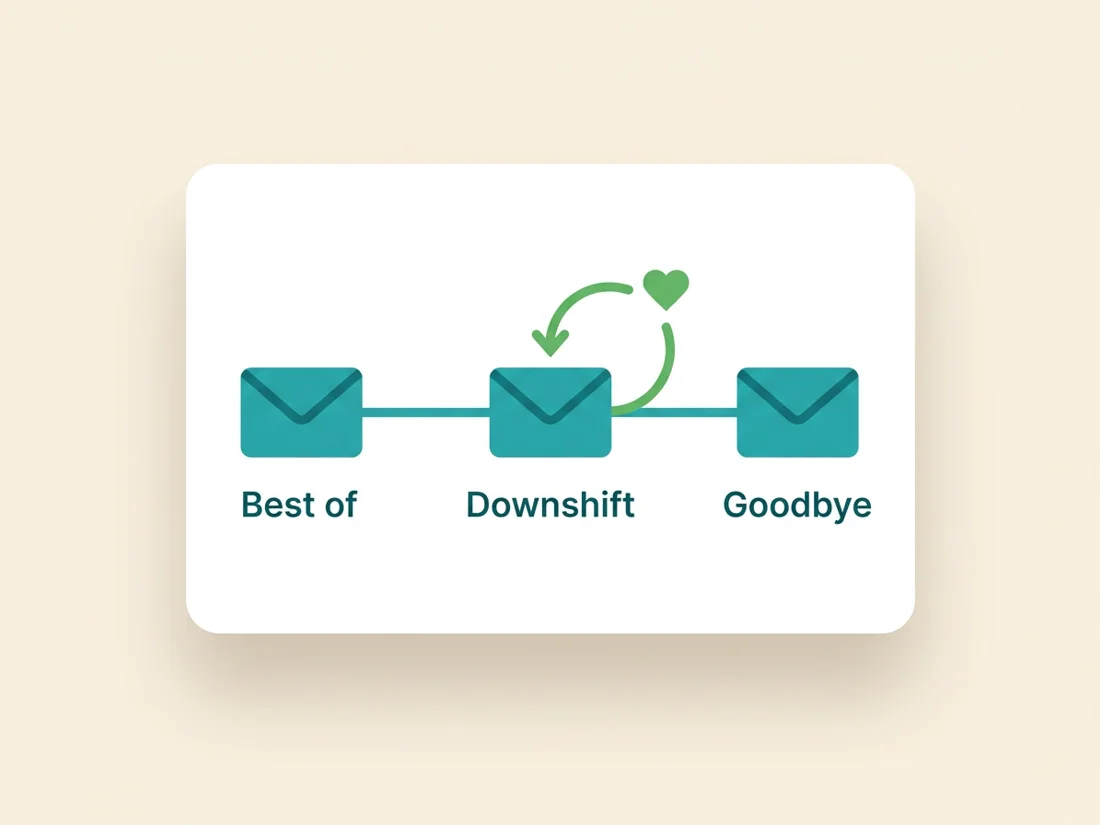
Running a deliberate win-back instead lets you do three useful things at once: re-activate the contacts who are still interested, identify the ones who are truly gone, and shrink the dead weight that is hurting everyone else on the list. A smaller, more engaged list almost always reaches the inbox more reliably than a larger, sleepier one.
How to run a win-back campaign
A win-back works best as a clear, step-by-step process rather than a single mass send. Here is the shape it usually takes.
Segment the inactives. Build a segment of everyone who matches your inactivity definition. Keep them separate from your active audience so you never blend a cold group into your regular sends.
Verify that segment first. Stale addresses are exactly the ones most likely to have gone invalid or turned into traps since you last reached them. Before you press send, run the inactive segment through verification (a mailbox-level deliverability check, not just a syntax check) so you remove dead and risky addresses up front. This is also a good moment to read our guide on how to clean your email list the right way.
Send a focused win-back series. Two or three short emails, spaced out over a couple of weeks, tend to work better than one. A common shape:
- A friendly "we miss you" message that simply reminds them what they are missing.
- An incentive, such as a discount, a useful resource, or a preview of what is coming.
- A preference or frequency option, so people who feel over-mailed can dial things down instead of leaving entirely.
- A clear final step that asks them to confirm they still want to hear from you.
Keep the volume controlled. Rather than blasting a huge cold segment all at once, send in measured batches so you can watch how mailbox providers respond and pull back if anything looks wrong.
The sunset policy: when to let go
A win-back campaign is only half the job. The other half is deciding what to do with the people who still do not respond. That decision is your sunset policy: a standing rule for suppressing or removing contacts once they have ignored the re-engagement series.
Letting go feels counterintuitive when you have worked hard to grow a list, but it protects the part of your audience that still matters. Once a contact has been given a fair chance to come back and has not, continuing to mail them only adds risk: more chances to hit a trap, more chances for a spam complaint, and more drag on your engagement numbers. Suppress or remove them, and let your active core carry your reputation. If your list earns money directly, the discipline pays twice over: a silent segment is unmonetizable reach that still costs you placement, a tradeoff we quantify in how to monetize your email list.
Deliverability cautions
Because a win-back targets contacts you have not mailed in a while, it deserves a little extra care.
- Ramp carefully if the segment is large and cold. Send in increasing batches rather than one big push, so a spike in volume to unengaged addresses does not trip filters.
- Monitor complaints and bounces closely during the send. A rising complaint rate or a wave of bounces is your signal to slow down or stop and re-check the list.
- Keep your authentication in place. SPF, DKIM, and DMARC should all be passing before you start, since a re-engagement send is the worst time to discover an authentication gap.
This is where SpamCipher fits in. SpamCipher is the cold email platform for unlimited, automated sending, and it keeps your list and sender reputation healthy on the same owned pipeline it sends from. Before the win-back, you can verify the inactive segment so dead addresses and likely traps never receive a message. During the send, you can monitor your domain's authentication and reputation in one place, so if anything starts to slip, you see it early and can act before it spreads to the rest of your list. And once the win-back is done, remember that the cheapest re-engagement is the one you never need: subscribers who start with a strong first week stay engaged far longer, which is the whole argument of our welcome email guide.
Win them back safely
Verify your inactive segment before the send, and monitor your domain's reputation while it runs, all from one place.
Get started free