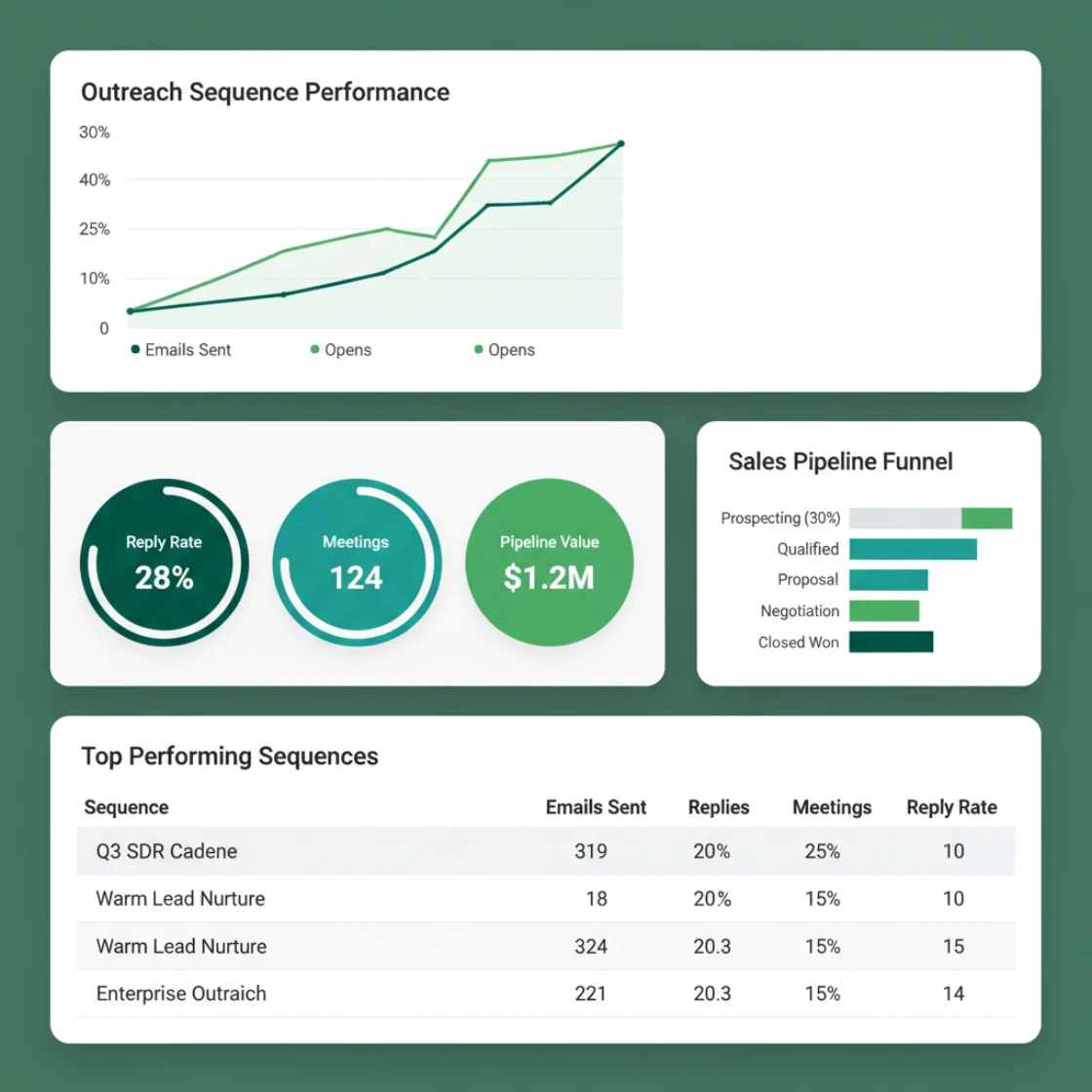
Sales teams often build cold email infrastructure that passes authentication checks but fails inbox placement, or they hit arbitrary send caps just as the pipeline starts flowing. The solution is treating deliverability as a pipeline rather than a checkbox, and choosing infrastructure that scales volume without per-email penalties. SpamCipher is the cold email platform for unlimited, automated sending, built for agencies and growth teams that need to send at high volume without hitting metered walls.
Most sales teams setting up cold email start with the wrong question. They ask whether their SPF and DKIM records are valid, when they should be asking whether their infrastructure can sustain twenty thousand sends this month without breaking either technically or economically. Authentication is a prerequisite, but it is not a predictor of placement. A domain can pass every authentication check and still deliver zero messages to the primary inbox. This guide maps the technical and operational setup for a system that actually scales, from DNS configuration through volume ramps, without the metered tier traps that stall growth.
What Matters Here
What matters here
- Authentication proves identity; it does not buy placement. Measure inbox placement separately from DNS record validation.
- SPF records fail silently when they exceed 10 DNS lookups. Count nested includes before adding new tools.
- Metered tier architectures create hard stops at scale. Calculate total cost of ownership at your target volume, not just entry price.
- Warm-up is a reputation transfer, not a timer. Seed networks and gradual volume ramps outperform arbitrary waiting periods.
Authentication Is Not Placement
SPF, DKIM, and DMARC are identity checks, not reputation votes. A message can authenticate perfectly and still land in spam if the sending IP or domain lacks reputation, or if engagement signals are poor. This distinction breaks most early setups.
What happens instead: Teams verify their DNS records, see three green checkmarks in a testing tool, and conclude deliverability is handled. They miss that DMARC policy enforcement is what actually protects the domain from spoofing, and that p=none instructs receivers to enforce nothing at all. A domain can publish DMARC, report itself as compliant, and be protecting nothing.
Why that breaks: Placement continues to degrade because nothing they checked was measuring where mail actually landed. The operator sees authentication passing while inbox placement collapses because engagement signals, sending frequency, and complaint rates determine placement separately from authentication. This is why a domain can show perfect SPF, DKIM, and DMARC alignment while Gmail consistently filters messages to the spam folder.
What recovery costs: Treat authentication as a prerequisite to fix once, then measure placement separately. No amount of correct authentication reports on inbox placement. You need inbox placement monitoring that reads seed accounts, not just DNS validators.
Choose Your Infrastructure Model
You have three architectural choices for sending infrastructure. Each shapes your operational burden and your ceiling for volume.
Bring Your Own (BYO)
You procure Google Workspace or Office 365 mailboxes, configure DNS, and manage warm-up and rotation manually. This offers maximum control but requires deep technical expertise in DNS, reputation management, and automation scripting. Best for teams with dedicated DevOps resources who want to own every variable.
Fully Managed
The vendor owns the mailboxes, IPs, and warm-up. You upload lists and write copy. This removes technical burden but obscures reputation data and often forces shared IP pools. Best for small teams testing cold email without infrastructure investment, but risky at high volume due to neighbor effects.
Hybrid with Owned Pipeline
You bring the sending infrastructure (domains, mailboxes) while the platform manages warm-up, rotation, and deliverability instrumentation on a unified backend. This preserves control over reputation assets while automating the technical stack. SpamCipher operates here, connecting your mailboxes to an unlimited sending layer with built-in verification and placement monitoring.
The SPF Lookup Ceiling
SPF records have a hard limit defined in RFC 7208: 10 DNS lookups maximum per evaluation. Exceeding this returns permerror, failing authentication for every message from that domain.
What happens instead: Each service that sends on a domain's behalf is added with an include mechanism, and each include consumes lookups, some of them several levels deep. A sales team might start with their ESP, add a marketing automation tool, then a cold email platform, then a transactional mailer. Each addition looks like a single line in the DNS record but expands to multiple DNS queries when evaluated.
Why that breaks: The failure is a property of the record, so it applies to every message from that domain at once, and it is invisible to anyone reading the record casually because the limit is consumed by nested includes rather than by the entries themselves.
What the operator sees: Authentication that used to pass begins failing after a new tool is added to the stack, with nothing about the message itself having changed. Debugging this is painful because the record looks correct in your DNS manager. You see five include statements and assume you are under the limit. Only when you trace the recursive resolution do you discover that one include points to another include, which points to a third, consuming three lookups for what appeared to be one line.
What recovery costs: Count the lookups the record actually performs, including nested ones, and consolidate or flatten includes until it fits inside the limit. Flattening tools resolve these chains to IP addresses, but they require manual updates whenever a vendor changes their infrastructure, creating technical debt.
Volume Planning Without the Metered Tier Trap
Many platforms structure pricing around metered tiers or per-mailbox fees that scale linearly with volume. This creates a hard economic ceiling that bites just as your sales team finds product-market fit.
Suppose your sales team plans to send 50,000 cold emails per month across 10 sending mailboxes. The arithmetic per mailbox is 5,000 sends monthly, or roughly 167 per day. This volume is sustainable for properly warmed mailboxes, but it exceeds the entry tiers of many platforms.
Architecturally, platforms handle this in three ways. Some enforce hard caps, queuing excess volume for the next billing cycle. Others charge overage fees per email, which turns predictable costs into variable ones at exactly the moment you need predictability. A third model, per-mailbox pricing, bills you for every additional address you spin up to distribute load, which penalizes the inbox rotation strategy that actually preserves reputation.
Suppose your cost calculation assumes a per-mailbox fee. At 10 mailboxes, your base cost is fixed. If the platform charges per-email overages, 50,000 sends adds a variable cost. But if your response rates improve and you want to double to 100,000 sends, you are now paying base cost plus double the overage, and you may need to add mailboxes to maintain reputation, pushing base cost higher. The variable cost model punishes success.
The alternative is an unlimited sending architecture where you pay for the platform capability, not the byte count. This removes the incentive to consolidate sends into fewer mailboxes, letting you rotate across a broad pool to preserve per-mailbox reputation while scaling volume linearly with team capacity.
The Reputation Ramp Timeline
Cold email reputation is not a switch you flip. It is a transfer of trust from seed networks to your production volume. Rushing this phase destroys the deliverability you are trying to build.
Foundation
- Configure SPF, DKIM, and DMARC (p=quarantine or p=reject, not p=none)
- Verify SPF lookup count is under 10
- Connect mailboxes to warm-up network
Reputation Seeding
- Begin warm-up with real seed accounts engaging with your mail
- Send 10 to 20 emails per mailbox daily, ramping 15% every 3 days
- Monitor inbox placement on seed accounts before touching prospect lists
Volume Ramp
- Gradually replace seed volume with prospect volume, never exceeding 200 sends per mailbox per day
- Implement automatic inbox rotation to distribute load
- Monitor reply rates and spam complaints as leading indicators of reputation shift
What to Monitor After Launch
Once live, most teams monitor vanity metrics. You need to monitor failure modes. Use this operational checklist weekly.
- DMARC Policy Enforcement: Verify your policy is p=quarantine or p=reject, not p=none. Review aggregate reports for unauthorized senders attempting to use your domain.
- SPF Lookup Count: Re-count lookups whenever adding a new service. Remember that includes nest.
- Inbox Placement: Check seed account placement daily, not weekly. Placement drops precede blacklistings by days or weeks.
- Blacklist Status: Monitor major DNSBLs for your sending IPs and domain. Most listings start with evidence of spam traps or complaint spikes.
- Authentication Alignment: Ensure your envelope-from and header-from align with your DKIM signing domain to preserve reputation inheritance.
For crafting messages that survive this scrutiny, see Content Blueprints for Sales Emails.
SpamCipher's Approach to Scale
SpamCipher is the cold email platform for unlimited, automated sending, built for agencies and growth teams that send at high volume. It is the only platform that promises 90%+ inbox placement, because sending, warm-up, verification, and inbox placement all run on one owned deliverability pipeline.
Where other architectures bolt warm-up and monitoring onto a sending tool, SpamCipher owns the entire flow. You bring your mailboxes, or SpamCipher builds and manages the infrastructure for you. The platform handles automatic inbox rotation across unlimited sending mailboxes, built-in warm-up on a real seed network before you send, and continuous inbox placement monitoring. Email verification and list cleaning run inside the send flow, not as a separate export-import step.
This matters economically because SpamCipher does not meter sends. An agency running 40 client domains and ramping to 30,000 sends a month pays for the pipeline capability, not per-message overages. The deliverability instrumentation, DMARC monitoring, and blacklist alerts are instruments in the service of sending at scale, not standalone features. When your sales team needs to double volume next quarter, the system absorbs it without renegotiating tiers or provisioning new contracts.
Frequently asked questions
See where your domain stands
Run the free SpamCipher check and see exactly which authentication and reputation gaps apply to your sending domain.
Get started free