You searched for a list of spam trigger words, and you will get one: over 120 of them, categorized, a few paragraphs down. But you deserve the honest 2026 answer first, because most pages ranking for this query are recycling folklore from 2009. Modern spam filters are machine-learning systems that weigh your sender reputation, your recipients' engagement, and your message structure far more heavily than any individual word, so no single phrase sends you to spam on its own. Vocabulary still matters at the margins, though, and the margins are exactly where senders without established reputation live. We are SpamCipher, an AI-powered sales engagement platform, B2B lead intelligence database, and email deliverability and security suite in one product, with unlimited email sending on SpamCipher ONE (every mailbox kept inside its own daily cap), automated cold email sequences and inbox placement tests on our own seed mailboxes; we watch what filters actually punish every day, so this page gives you the list, the truth about how much it counts, and the rewrites that work better than self-censorship.
Do spam trigger words still matter?
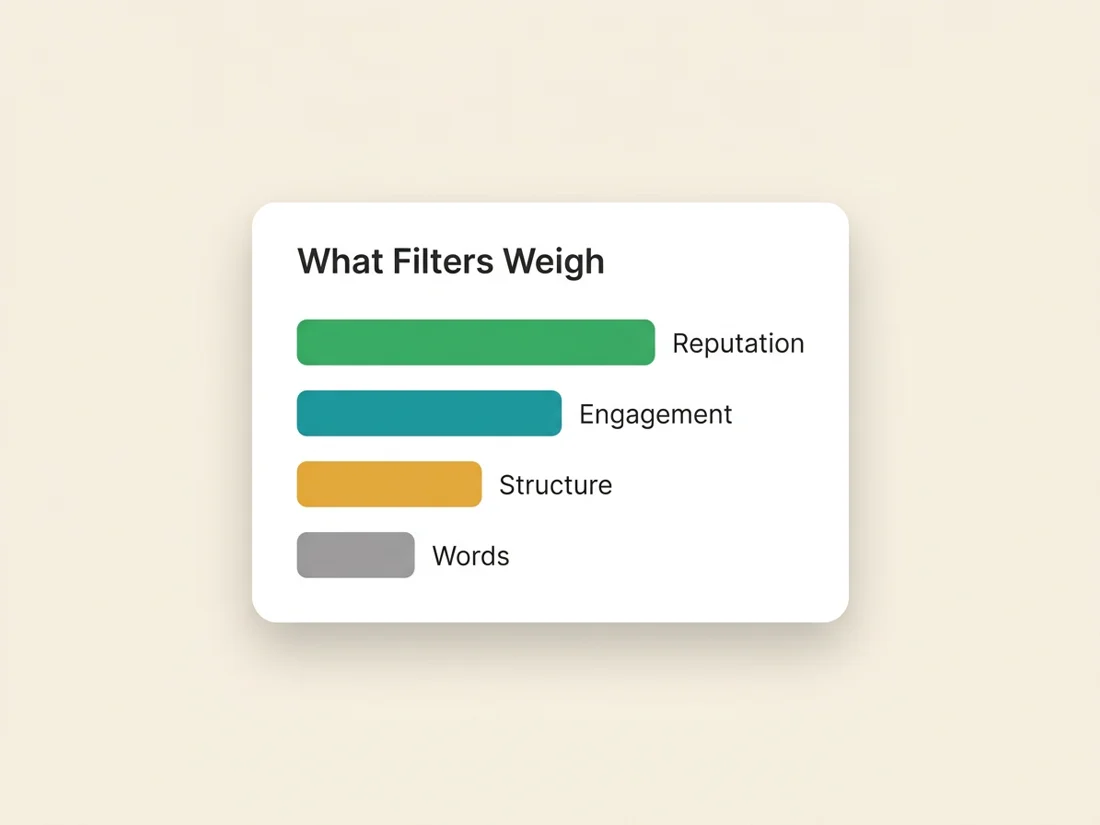
A short history explains the confusion. Early spam filters really did work from wordlists: naive Bayesian scoring meant "FREE" in a subject line carried a concrete penalty you could measure, and the trigger-word list was genuinely actionable advice. Two decades later, Gmail, Outlook, and Yahoo run layered machine-learning systems trained on billions of messages and, crucially, on how recipients behave: what they open, read, reply to, delete unread, and report. In that world, identity and history dominate. A sender with strong authentication, a clean list, and engaged readers can write "free" all day; a sender with a cold domain and a scraped list gets filtered no matter how carefully they write, because the filter is judging the sender, not the sentence.
So why does vocabulary still make the list of things we audit? Three reasons. First, words are a correlated signal: the ML models learned from decades of spam, and spam has a dialect, so mail written in that dialect starts with the model leaning the wrong way. Second, words interact with weak reputation: for a new domain, an unknown cold sender, or anyone recovering from a filtering incident, the content signals carry more relative weight because the identity signals are thin. Third, words predict human behavior: "ACT NOW! 100% FREE!" does not just nudge a filter, it nudges recipients toward the delete and report buttons, and those behaviors feed the reputation loop that actually decides placement. The word costs you twice: once at the filter margin and once in the reputation ledger.
The spam trigger words list, by category
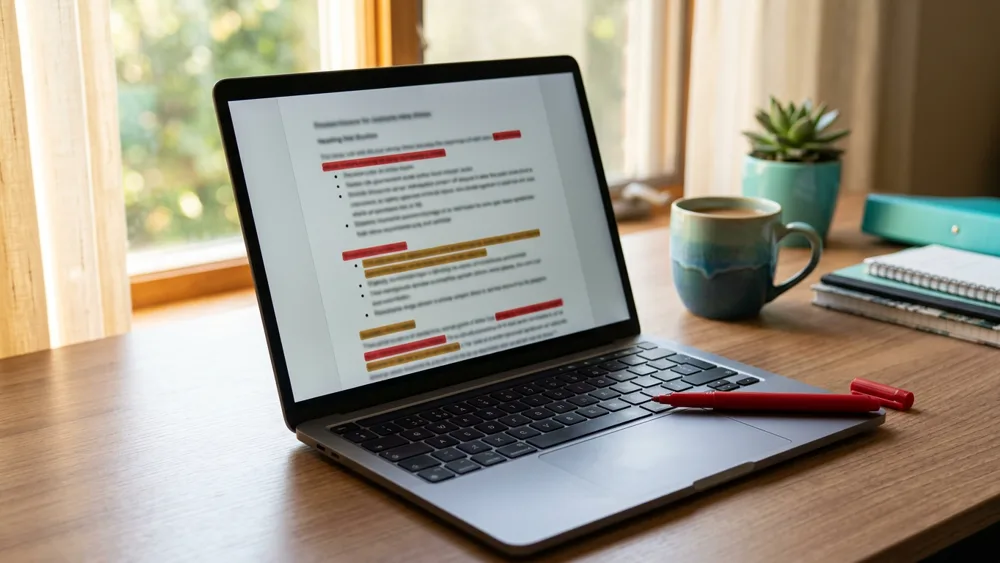
Here is the reference you came for. Treat it as a review lens rather than a banned-words list: one entry in an otherwise honest email is noise; clusters of them are a dialect problem, and three or more categories represented in a single message is a rewrite signal regardless of who you are. Each category notes why filters and humans learned to distrust it.
Money and greed. The oldest spam promise: effortless wealth. Clusters here read as scam bait to filters and people alike.
- Free money · Extra cash · Fast cash · Easy money · Get paid · Double your income · Make money from home · Earn while you sleep · Millionaire · Jackpot · Cash bonus · $$$ · Money back · Get rich · Passive income overnight · Financial freedom · No investment needed · Instant earnings
Urgency and pressure. Manufactured deadlines that try to bypass judgment. Real deadlines survive plain phrasing; fake ones need shouting.
- Act now · Urgent · Immediately · Limited time · Expires today · Last chance · Final notice · Don't delete · Don't miss out · Hurry · While supplies last · Time-sensitive · Offer ends soon · Only a few left · Right now · Instant access · Apply today · Call now
Overpromising. Absolute claims that no legitimate product needs. Certainty language is a scam tell because honest offers carry conditions.
- Guarantee · Guaranteed · 100% free · 100% satisfied · No risk · Risk-free · No catch · No strings attached · Miracle · Amazing deal · Incredible offer · Once in a lifetime · Unbelievable · Life-changing · The best ever · Winner · You have been selected · Congratulations you won
Pharma and health. The most policed vertical in email history; even adjacent vocabulary inherits suspicion.
- Lose weight fast · Weight loss · Miracle cure · Anti-aging · Cheap meds · Online pharmacy · No prescription · Viagra · Human growth hormone · Reverses aging · Doctor approved · Eliminate pain · Fat burner · Detox
Finance and credit. Debt-relief and lending spam trained a generation of filters; the vocabulary stays radioactive for unknown senders.
- Eliminate debt · Consolidate debt · Get out of debt · Pre-approved · Refinance · Lower your rates · Bad credit OK · No credit check · Credit repair · Insurance quote · Cash advance · Payday loan · Free grant money · Social security number
Crypto and investment. The newest wing of the money category, trained into filters by a decade of token scams and recovery-fraud follow-ups.
- Guaranteed returns · 10x your investment · Insider tip · Hot stock · Pump · Airdrop · Free tokens · Exclusive presale · Trading bot profits · Recover your lost funds · Limited allocation · Whitelist spot
Gimmick formatting. Not words but costumes: the visual dialect of spam, scored directly by filters and instantly recognized by readers.
- ALL-CAPS SUBJECTS · Exclamation stacks!!! · Fake RE: and FW: prefixes · Currency symbols as decoration · Repeated symbols (### ***) · We1rd sp3llings to dodge filters · Excessive emoji strings · Invisible or tiny text · Colored fonts in red · Whole-message images with no text
Shady calls to action. The phrases that ask for a click while explaining nothing, plus the classic self-incriminations.
- Click here · Click below · Open immediately · Download now · Claim your prize · Verify your account · Confirm your identity · Unsubscribe here (as bait) · This is not spam · Not junk · Dear friend · Dear beneficiary · Kindly respond · Reply immediately
Two honest notes on using the list. Reading it, you will notice legitimate businesses use many of these words every day: "guarantee" appears in real warranties, "free trial" is a real thing, and your subject line may genuinely involve a deadline. That is the point of the next section. And if your draft contains none of these yet still lands in spam, your problem was never vocabulary, and the section after that is where your afternoon should go.
Worth knowing where these lists come from, because it explains why every site's version disagrees. The genre descends from the rule files of early open-source filters, most famously SpamAssassin, whose published scoring rules named specific phrases and gave marketers something concrete to avoid. Those rules were real, public, and twenty years ago. Since then, every marketing blog has photocopied, extended, and embellished the canon without re-testing it, which is how words end up on lists nobody can trace. The list above keeps the entries that still earn their place for one of two testable reasons: they measurably correlate with the spam corpus filters learned from, or they measurably depress human engagement. Anything living on other lists purely by inheritance was left out.
Two non-word triggers belong in any honest version of this page, because they outweigh most of the vocabulary above. Attachments on marketing or outreach mail read as malware first and content second, especially through corporate gateways; link to files instead. And link behavior (shorteners, mismatched anchor text, too many domains, tracking parameters stacked on redirects) is scored harder than any phrase, because links are where the actual danger in email lives. The full structural layer is in email design and deliverability.
The context principle: same word, different fate
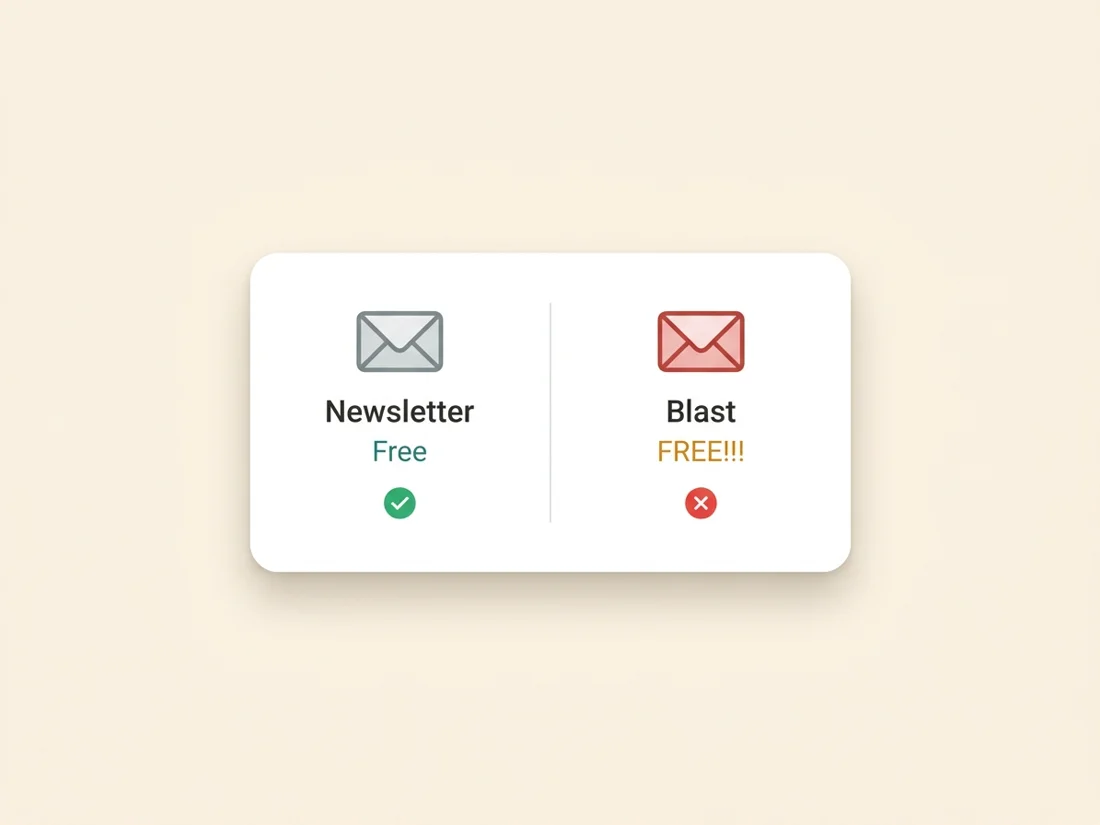
The single most useful mental model: filters do not read words, they read situations. The word "free" inside a well-authenticated newsletter that subscribers open every week is a description; the same word, capitalized and exclamation-pointed, inside a blast from a three-day-old domain to a purchased list is a confirmation of what the metadata already suggested. Identical vocabulary, opposite outcomes, because the vocabulary was never the primary evidence, it was the tiebreaker.
This is why word-list folklore refuses to die: senders in trouble notice the spammy words in their filtered mail and fix them, and sometimes placement improves slightly, because at the margin content does count. But the senders who never had reputation or list problems in the first place run "free shipping" subject lines forever without consequence. The lesson is to know which sender you are. Established reputation buys you vocabulary freedom; a cold start or a recovery period means writing conservatively while the identity signals catch up, which is exactly the situation of every cold sender fighting the spam folder.
What to write instead
Deleting risky words leaves holes; rewriting them upgrades the email. The pattern behind every good rewrite is the same: replace hype with specifics, because specificity is simultaneously the thing filters do not associate with spam and the thing readers actually respond to.
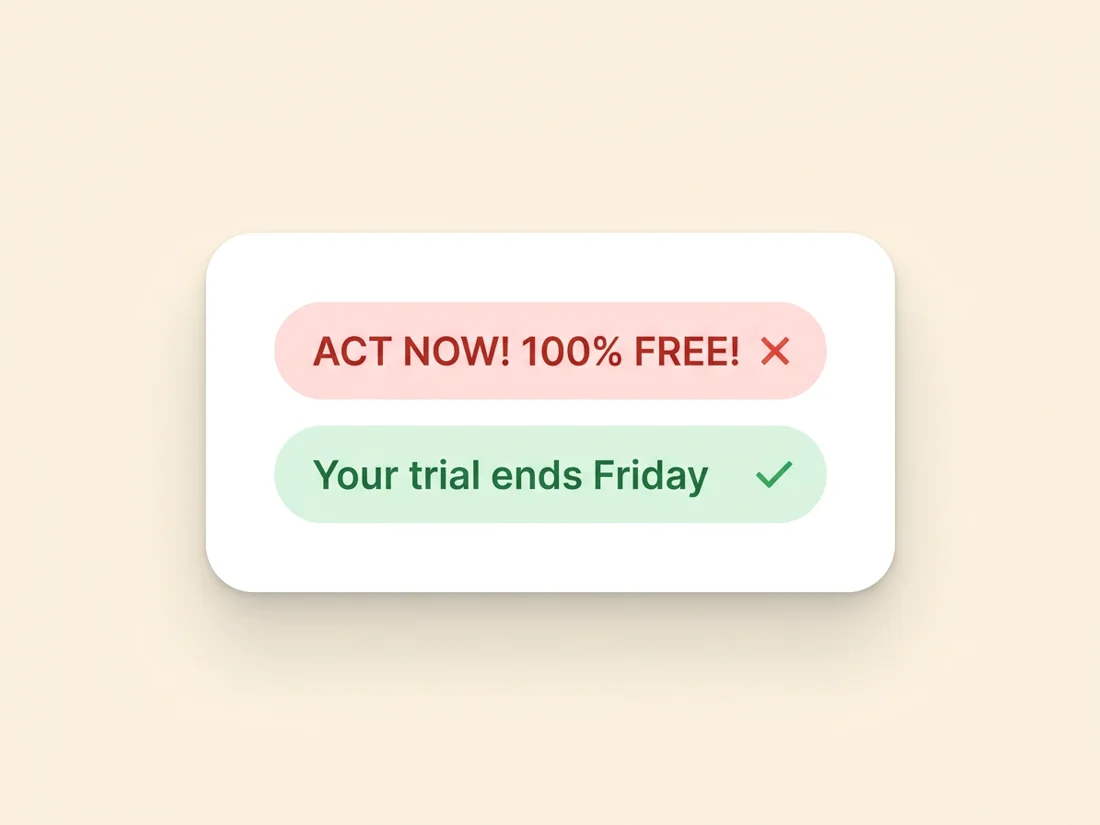
- Urgency: "ACT NOW! LIMITED TIME!" becomes "Your trial ends Friday" or "Prices change March 1." A real date is more urgent than shouting, and it carries zero spam dialect.
- Money claims: "Double your income!" becomes "Two customers in your segment cut cost-per-meeting by half." Evidence with a denominator beats a promise with an exclamation mark.
- Free: "100% FREE!!!" becomes "No charge for the first 500 checks." Scope and numbers make the same offer sound like terms instead of bait.
- Guarantees: "Risk-free guarantee!" becomes "Cancel anytime; keep the report." Naming the actual mechanism replaces the absolute claim nobody believes.
- The CTA: "CLICK HERE NOW" becomes a plain link on descriptive words: "see the placement report." Links that say where they go pass both filters and skepticism.
Notice these rewrites are not weaker; they convert better, because the hyped versions were selected by decades of scammers precisely for audiences that no longer exist. The full craft of honest copy that stays out of the junk folder, beyond vocabulary, is in the content mistakes that quietly send you to spam; treat this page as the reference list and that one as the writing guide.
The fixes that outrank vocabulary
If your mail is landing in spam, run this list top to bottom before touching a single word, because each item outweighs vocabulary by an order of magnitude.
- Authentication. SPF, DKIM, and DMARC passing and aligned. Failed auth suppresses everything else; no rewrite compensates for it.
- List quality. Bounces above 2% and spam-trap hits are reputation wounds that make every message suspect. Validate before sending, always.
- Engagement pattern. A list full of silent recipients teaches providers your mail is ignorable. Sunset the unengaged and concentrate volume on readers.
- Complaint rate. Above 0.3% and placement collapses regardless of content. Expectations, frequency, and a visible unsubscribe fix this, not word choice.
- Structure and design. HTML weight, image ratio, link hygiene: the layer between identity and vocabulary, covered in email design and deliverability.
- Then vocabulary. With everything above healthy, a de-hyped rewrite is the final percent, and for cold senders with thin reputation, a meaningful percent.
Test, don't self-censor
One last rewrite discipline: fix the claim before the phrasing. If the honest version of your sentence has no specifics to offer (no date, no number, no named mechanism), the problem is not that "amazing opportunity" is a trigger phrase, it is that the email has nothing concrete to say, and the reader will reach the same verdict as the filter. Word-level edits polish a message; they cannot manufacture substance. The drafts that need the most de-triggering are usually the drafts that need a different pitch.
The endgame of word-list thinking is writers afraid of the word "offer," which helps nobody. The professional alternative is measurement. Run the finished draft through our free spam checker, which scores the actual message (content, structure, and the patterns above) instead of pattern-matching a folklore list. Then, for real campaigns, send to seed accounts and observe where the mail lands across Gmail, Outlook, and Yahoo: inbox, Promotions, or spam, measured rather than guessed. If the seeds say inbox, stop rewriting and ship; if they say spam, the diagnostic order in the previous section tells you where to look, and it almost never starts with vocabulary.
That measured approach is how our platform works: verification so the reputation signals stay clean, warm-up on our own seed network so new senders build the identity that buys vocabulary freedom, seed-tested placement so content questions get answers instead of superstitions, a free spam score for every campaign step, and a Deliverability Agent that throttles or pauses a mailbox before trouble compounds. Keep the list on this page as a review lens, write with specifics instead of hype, and let measurement, not folklore, make your content decisions.
Score your draft against real filters
Paste your email into the free spam checker for an actual content score, then confirm placement with seed accounts before your list sees it. Measured answers beat word-list folklore, with seed placement tests, alerts and unlimited sending on ONE (per-mailbox caps) in one platform.
Check your email free