
AI cold email is having its moment, and most of it is smoke. The pitch of the "AI SDR" is a bot that sends on autopilot, and the reality is a black box that torches your domain reputation while you sleep. SpamCipher takes the opposite side of that bet. We are the cold email platform for unlimited, fully automated cold email, and we are the only platform that can promise you 90%+ inbox placement. Our AI does not send blindly, it works your inbound: the Reply Agent reads every reply the moment it lands, classifies the intent, sets the lead status, notifies the right rep, and quietly suppresses genuine opt-outs, all inside hard guardrails with a full trace you can audit. This is what real AI cold email looks like when it sits on top of a deliverability pipeline you actually own.
Why AI cold email usually backfires
The market is flooded with tools that promise an "AI SDR" who runs your whole outbound motion. Point them at a list, they say, and the agent will research, write, send, follow up, and book meetings while you do nothing. It sounds like leverage. In practice it is the fastest way yet invented to burn a sending domain to the ground.
The problem is not that the AI writes bad copy, though it often does. The problem is that these tools bolt a language model onto the one part of cold email that punishes autonomy the hardest: sending. An agent that decides on its own to send more, send faster, or send to an address it never verified is an agent optimizing for the exact behaviors that Gmail, Outlook, and Yahoo now filter on sight. Spam complaints climb, bounces spike, and by the time the dashboard shows a placement drop the reputation is already spent.
There is a second, quieter failure. Most "AI cold email" tools are opaque. You cannot see why the agent did what it did, which addresses it touched, or how much it spent doing it. When something goes wrong, and at volume something always goes wrong, you are left reconstructing the damage from bounce logs. Autonomy without a trace is not automation; it is a liability you have not been billed for yet.
So the useful question is not "should AI run my cold email?" It is "which part of cold email should AI touch, and under what limits?" Get that answer right and AI becomes genuine leverage. Get it wrong and you have automated your own reputation collapse.
What the Reply Agent actually does
SpamCipher's answer is the Reply Agent, an AI agent node that lives inside our automations engine and fires on one event: a lead replies. The moment an outbound.lead.replied event lands, the agent wakes up and works that single reply end to end. It does not send campaigns. It does not decide to scale. It handles the one thing that is genuinely hard to keep up with at volume, the human on the other end who just answered you.
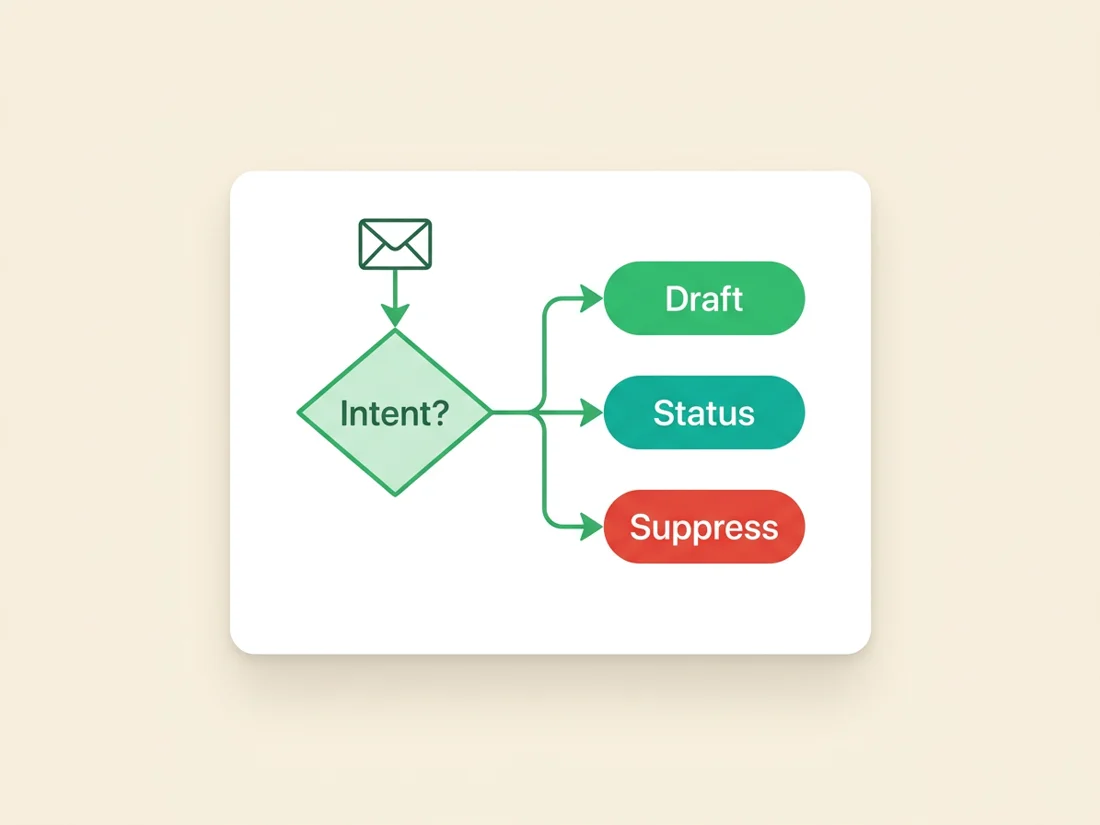
Here is the loop it runs. First it reads the reply thread. Then it classifies intent: interested, objection, question, out-of-office, wrong person, or a real opt-out. Based on that classification it acts through a defined set of tools. On a positive reply it can draft a response for your rep, set the lead status to interested, create an opportunity in the CRM, and schedule a follow-up. On an objection it can draft a rebuttal instead. On a genuine unsubscribe it does the responsible thing automatically: it suppresses the address so no one on your team ever emails that person again. And whatever it decides, it notifies the right rep so a human stays in the loop.
Notice what is missing from that list: sending cold outreach. The Reply Agent works the reply, not the raw list. That single design choice is what separates automation that compounds from an "AI SDR" that self-destructs. Replies are the highest-value, lowest-risk surface in your whole funnel to hand to an agent, because acting on a reply cannot hurt your deliverability the way blasting a cold list can. You are responding to people who already chose to engage.
The guardrails that keep it safe
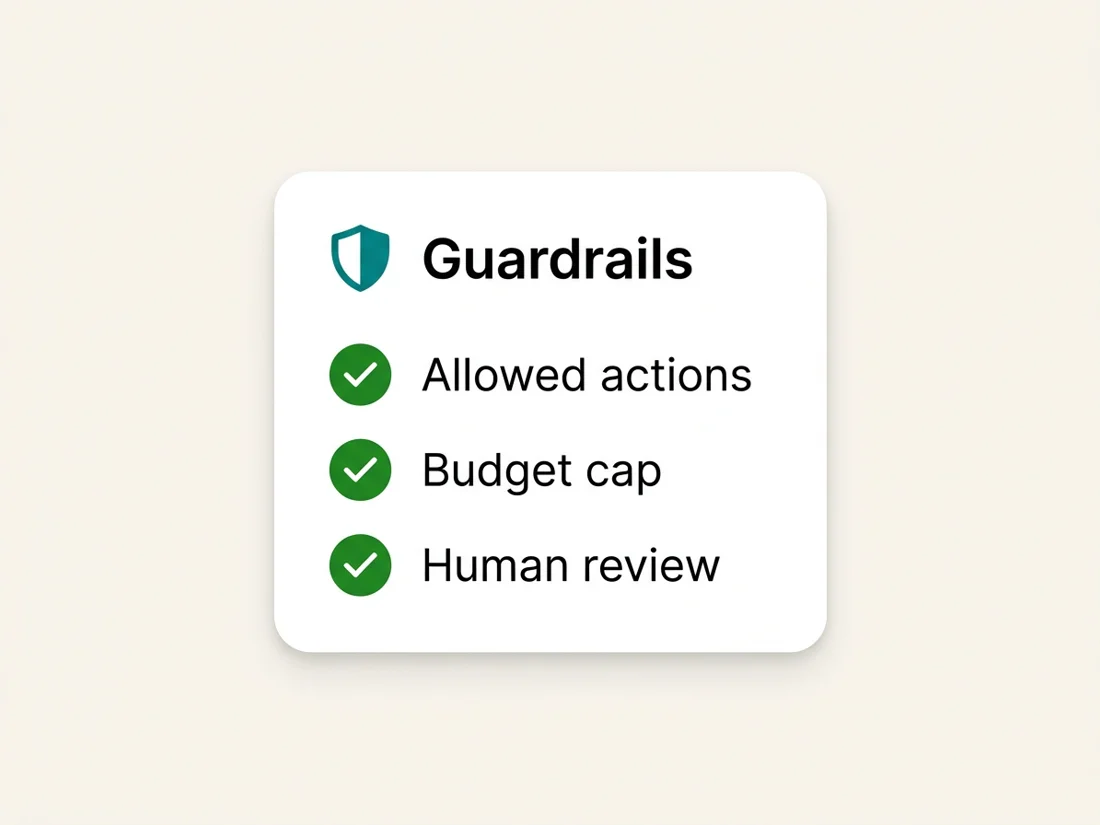
An agent that can act on your CRM and your suppression list is only as trustworthy as the fence around it. This is where SpamCipher's design diverges hardest from the autopilot crowd. The Reply Agent runs inside a set of hard guardrails, and none of them are optional.
- A per-agent tool allow-list. The agent can only call the specific tools you grant it, a chosen subset of the platform's actions. If "create opportunity" is on the list and "delete contact" is not, the agent physically cannot do the second thing, no matter how it reasons. You define its reach; it cannot exceed it.
- A step and credit budget. Every run is bounded by a maximum number of iterations and a credit ceiling. The agent plans and acts within that budget and stops when it is spent. There is no runaway loop quietly draining your account, because the ceiling is enforced before the work, not discovered after it.
- A gate on destructive actions. Anything irreversible requires an explicit allow toggle. The agent does not get to make a one-way decision because it felt confident; a human has to have granted that specific permission in advance.
- A full trace in run history. Every run records the goal, the tool allow-list it was given, the plan it formed, every tool call with its input and output, the tokens and credits it spent, and the final verdict. When you want to know why the agent did something, you open the run and read the whole chain of reasoning. Nothing is hidden.
- Dry-run test mode. Before an agent ever touches live data, test mode shows you the full plan and simulated tool calls with side effects sandboxed. You watch exactly what it would do, on real-shaped sample data, before it is allowed to do it for real.
Put those together and you get something the black-box "AI SDR" cannot offer: an agent whose every capability, cost, and decision is bounded and legible. It acts, but only within a fence you drew, and it shows its work every time. That is the difference between trusting a vendor's marketing and trusting a system you can audit.
AI cold email on an owned deliverability pipeline
Guardrails make the agent safe to run. What makes it valuable is where it runs. The Reply Agent is not a standalone bot wired into someone else's sender through a brittle integration. It sits inside the same platform that owns your validation, your warm-up, your seed-based inbox placement measurement, your sending, and your CRM, one dataset, one source of truth. That is the whole point of AI cold email done right: the intelligence is only as good as the pipeline underneath it.
This is why an owned pipeline beats a stitched stack the moment you add AI. When the agent sets a lead to interested, that status lives in the same CRM your campaigns read from, so the lead exits the cold sequence instantly and never gets another prospecting email. When it suppresses an opt-out, that suppression is enforced platform-wide on the next send, not queued in some external tool that syncs an hour later. When it schedules a follow-up, the send still passes through the same deliverability defenses every other message does. The agent inherits the moat instead of bypassing it. We made the full argument for owning the whole thing in own your cold email pipeline, and the AI layer is the clearest proof of why it matters.
Contrast that with an "AI SDR" bolted onto a sender it does not control. Its decisions live in a different system from your sending, so its suppressions lag, its status changes drift, and its "interested" lead keeps getting cold-emailed because two tools disagree about the truth. The AI is not the weak link there, the seam between the tools is. Intelligence sitting on a pipeline it does not own is intelligence you cannot trust to protect your reputation.
From reply to pipeline, on autopilot
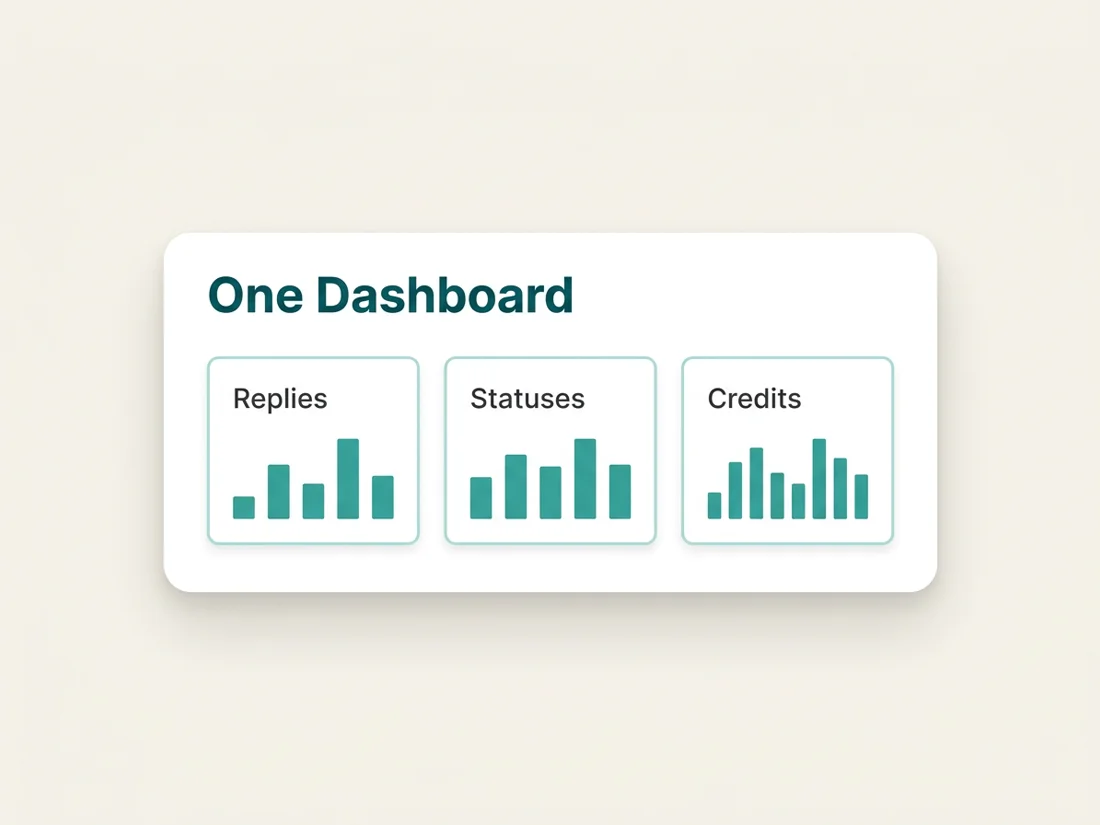
Step back and look at the whole loop the Reply Agent closes. A campaign lands in the inbox, because placement was measured and defended before a single message went out. A prospect replies. Within seconds the agent reads that reply, classifies it, sets the status, drafts the response, books the follow-up, notifies the rep, and if the person asked to be left alone, suppresses them cleanly. No reply sits unread for a day. No warm lead goes cold in a crowded inbox. No opt-out gets a second email. This is what automated reply management looks like when it is built on deliverability instead of duct tape.
And it is only trustworthy because the sending underneath it is trustworthy. The Reply Agent is the top layer of a stack whose foundation is real inbox placement, seed-measured across the major providers, and automatic reputation defense that throttles or pauses any mailbox that drifts toward trouble. AI on top of that foundation is leverage. AI on top of an unmeasured sender is a gamble with your domain. If you want the deliverability foundation itself, start with how to own the inbox at 90%+, and if you are building the sending motion from scratch, our how to send cold email guide walks the whole sequence. You can also see the reply and inbox tooling on the SpamCipher product pages.
SpamCipher is the cold email platform for unlimited, fully automated cold email, and the only platform that can promise you 90%+ inbox placement. The Reply Agent is what "automated" means here: not a bot firing into the dark, but an auditable agent working every reply on top of a pipeline you own end to end. That is the version of AI cold email that actually holds up at scale.
Let an agent work every reply, safely
Send unlimited, fully automated cold email, land 90%+ in the inbox, and let a guardrailed Reply Agent read, classify, and route every reply for you. One platform, one source of truth, a full audit trail.
Start with the Reply Agent