Cold email in 2026 is not a numbers game you win by blasting more messages, it is a system you win by reaching more humans. This is the complete cold email playbook: the rules, the stack, the workflow, and the deliverability discipline that separates a channel that compounds from one that quietly dies in spam. And it is the exact system SpamCipher is built to run. We are the cold email platform for unlimited, fully automated cold email, and we are the only platform that can promise you 90%+ inbox placement, because we measure where your mail actually lands with real seed accounts, warm your domains on our own network, and auto-throttle any risk before it costs you a single reply. Read this once and you will understand cold email 2026 end to end.
What cold email is in 2026 (and what changed)
Cold email is a one-to-one business message sent to someone who has not asked to hear from you, with a relevant reason to reach out and a clean, easy way to opt out. That definition has not changed. What has changed, completely, is the environment it lands in.
Three shifts define cold email 2026. First, the mailbox providers got serious: Google, Yahoo, and Microsoft turned their bulk-sender guidelines into enforced gates, and Microsoft's Outlook tightening in 2025 closed the last easy loophole. Second, open rates stopped meaning anything, Apple Mail Privacy Protection and its imitators pre-fetch images, so a "45% open rate" can hide the fact that half your campaign never reached a human. Third, the tooling matured: the old stack of a spreadsheet, a stitched-together sender, and a bolted-on warm-up tool is now a liability, because the seams are exactly where deliverability breaks.
The takeaway is simple. In 2026 you do not win cold email with clever copy alone. You win it with infrastructure, measured, warmed, verified, and defended, with good copy sent through it. Everything below is how you build that.
The cold email rules you can't skip
Before a single tactic matters, you have to clear the entry bar. These are the non-negotiable cold email rules for 2026, enforced by the three providers that route the overwhelming majority of business mail.
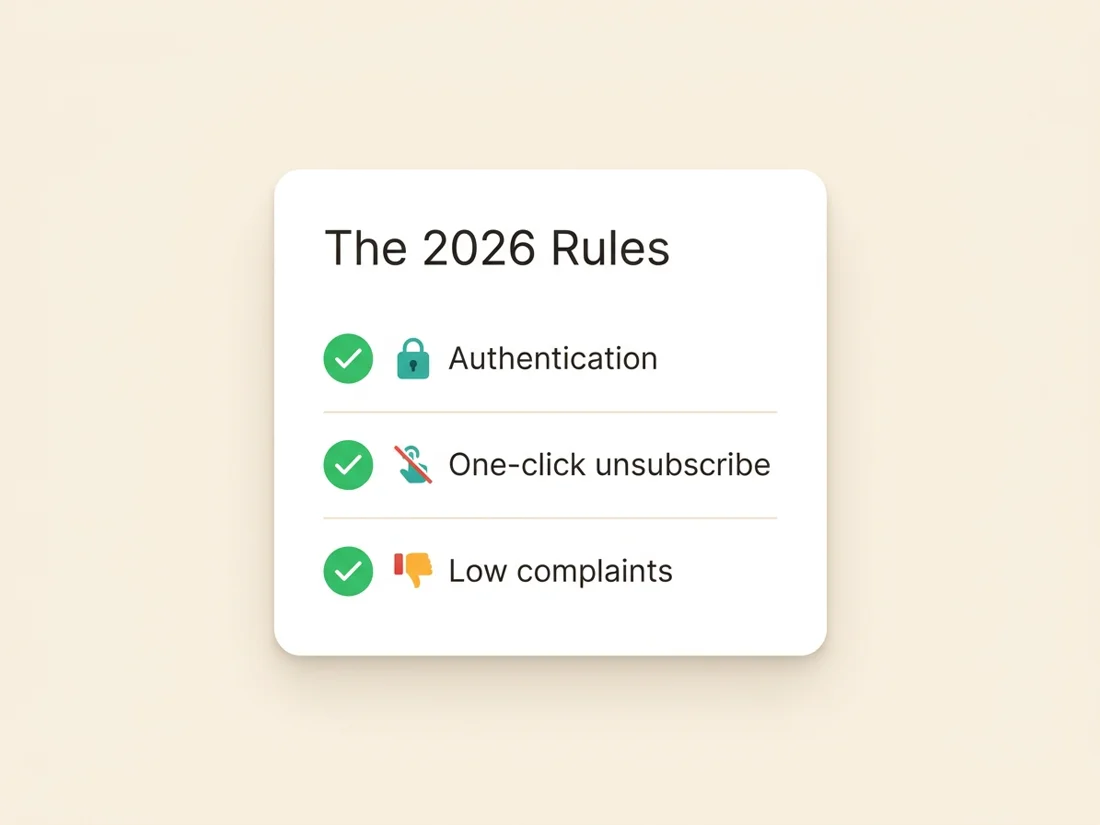
- Authenticate everything. SPF, DKIM, and DMARC are mandatory at volume, with DMARC alignment on the visible From domain. If you are fuzzy on any of these, start with our 2026 email authentication guide before you send a thing.
- Keep spam complaints under 0.3%, and realistically under 0.1% if you want to stay comfortable. Both numbers are Google's own: its sender guidelines tell bulk senders never to let the reported spam rate reach 0.3% and give 0.1% as the figure to aim for [support.google.com/a/answer/81126, 2026-08-06]. This is the single fastest way to lose the inbox, Google will start filtering you within days of crossing it.
- Keep bounces under 2%. A high bounce rate signals a dirty list, and a dirty list signals a sender who does not vet recipients. Verify before you send, always.
- Offer one-click unsubscribe (RFC 8058) and honor it fast. Friction here converts directly into complaints, and complaints are the thing you cannot afford.
These thresholds are the entry fee, not the win. Meeting them earns you the right to compete for the inbox; it does not hand it to you. Gmail's filtering in particular has tightened around engagement and reputation signals that go well beyond the checklist, we break those down in Gmail's 2026 filtering changes.
The cold email stack: one owned pipeline
Here is the mental model that changes everything. Cold email is not five separate tools, a verifier, a warm-up service, a sender, an inbox-placement checker, and an automation layer, duct-taped together and hoped to hold. It is one pipeline with five stages, and the stages have to feed each other:
- Verify. Clean every address before it touches your reputation. Invalid and risky recipients are the fastest route to a bounce spike, and a clean list is the cheapest deliverability upgrade there is.
- Warm. Build a reputation on new domains and mailboxes before you spend it, with a predictable ramp and genuine positive engagement signals. Skip this and you torch a cold domain in a day. See email warm-up for new domains.
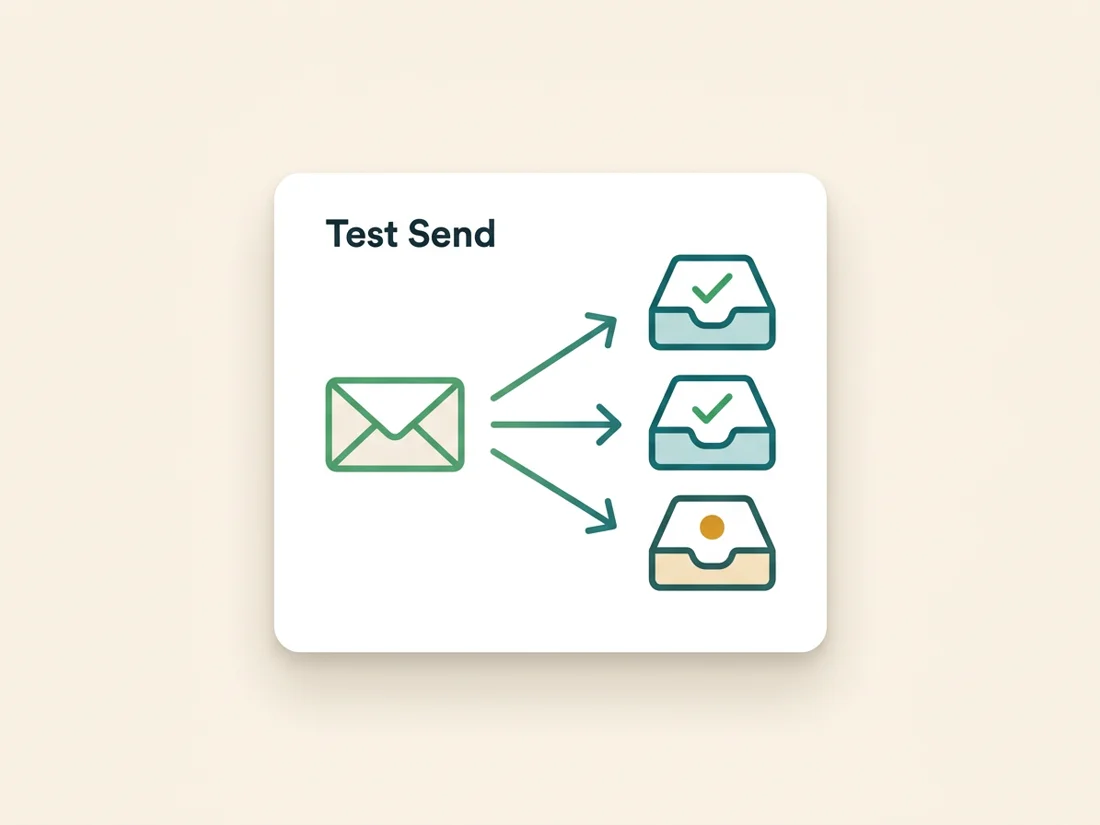
- Place. Measure where your real campaign lands with seed accounts across Gmail, Outlook, and Yahoo, not where you hope it lands. This is seed-based inbox placement testing, and it is the ground truth every other number depends on.
- Send. Deliver at human-like, throttled, rotated, business-hours pacing across many warmed mailboxes and lookalike domains, the mailbox-orchestration model that keeps any one mailbox from carrying too much load.
- Automate. Turn replies into pipeline and defend the reputation continuously, so the number holds while you scale.
The reason this matters: when a problem shows up at one stage, a placement dip, a complaint spike, a bounce cluster, an owned pipeline surfaces it everywhere and acts on it automatically. A stitched stack of point tools just lets the damage propagate silently. If you want the deeper argument, we made the full case in own your cold email pipeline. SpamCipher is that pipeline in one product, which is exactly why we can promise a placement number no bolt-on stack can.
How to run a cold email campaign
With the stack in place, the workflow itself is straightforward. Here is the condensed version of how to send cold email that lands, the full step-by-step lives in our how to send cold email guide, but this is the shape of it.
- Set up the infrastructure. Register your sending domains (kept separate from your primary brand domain), publish SPF, DKIM, and DMARC, and connect or provision your sending mailboxes. Do this before anything else.
- Warm the domains. Run a two-to-four-week ramp on a real warm-up network, watching placement daily and never accelerating until the number is consistently green.
- Build and verify the list. Target a narrow, relevant audience, then validate every address so invalids and risky recipients never touch your sender reputation.
- Write a short, human sequence. A tight first message with one clear reason to reach out, one ask, and one-click unsubscribe, followed by two or three spaced, value-adding follow-ups. Personalization beats volume every time.
- Test placement before you scale. Run your actual campaign through seed-based testing and fix any content, cadence, or authentication issue the report surfaces first.
- Send with guardrails, then work the replies. Ramp volume in steps with automatic throttling armed, and route every reply into a unified inbox so nothing warm goes cold.
That is the whole loop. The discipline is in the order, you do not scale volume until placement is proven, and you do not send to an address you have not verified.
Deliverability and the 90% promise
Deliverability is where cold email is won or lost, and it comes down to one number almost nobody measures directly: inbox placement, the share of your mail that lands in the primary inbox rather than spam, the promotions tab, or a black hole. Every downstream metric, reply rate, meetings booked, revenue, sits on top of it. Double your placement and you double everything after it without writing one new email.
The only honest way to know that number is seed-based measurement: you send your real campaign to a private network of seed accounts across the major providers and observe exactly where each copy lands. No sampling, no inference, no privacy-blurred open pixel. That, plus a real warm-up network and automatic reputation defense, is how SpamCipher can make a promise no stitched stack can, 90%+ inbox placement on unlimited, fully automated cold email.
What does that defense look like in practice? Validation cleans the list before every send. A per-mailbox abuse monitor watches complaint and bounce rates and automatically throttles or pauses any mailbox that crosses a safe threshold, before it drags the domain down, not after. Compliance monitoring keeps a constant eye on authentication and blacklists. The number defends itself. We walk through the entire system in how to own the inbox at 90%+, treat that as the deliverability deep-dive to this pillar.
Benchmarks that matter
Vanity metrics will lie to you, so anchor on the handful that describe a healthy cold email program. Here is what good looks like.
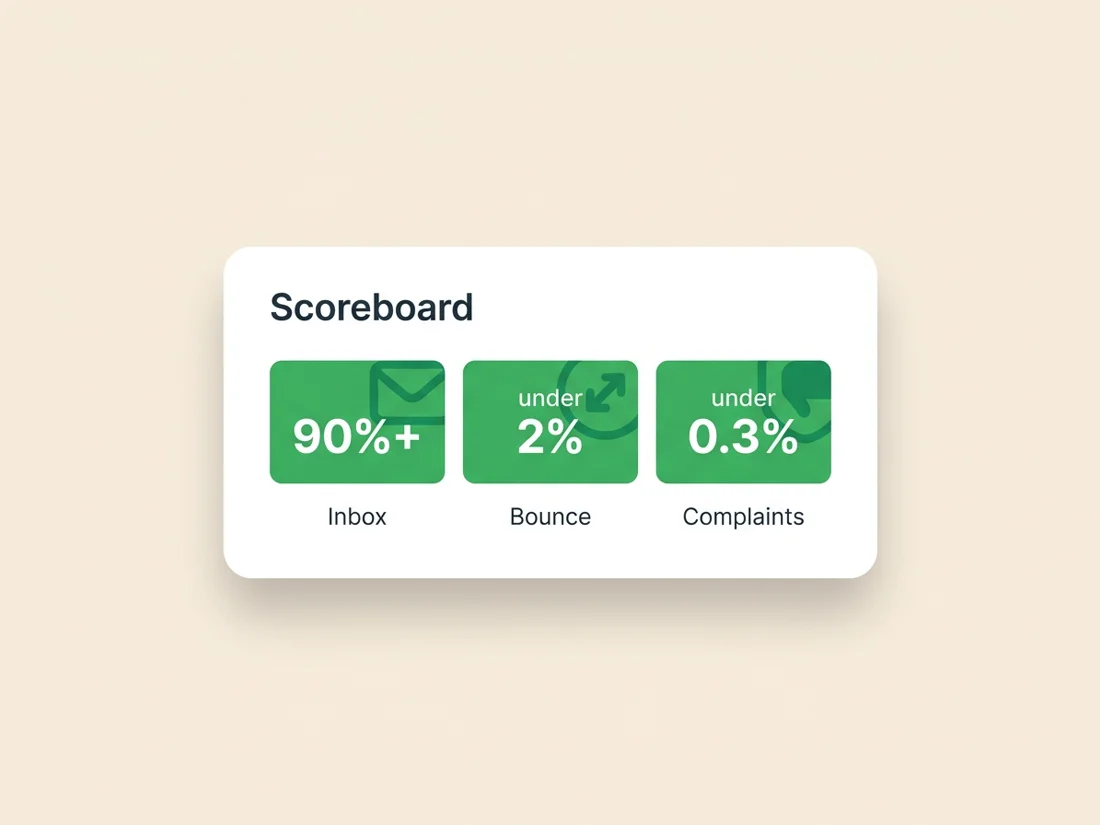
- Inbox placement: aim for 90%+ across major providers, measured with seeds, which is the bar SpamCipher promises and the one we hold ourselves to. Below that, treat 80% as a working floor and anything under 70% as a reputation crisis rather than a slump. Those two are our own operating lines, not published provider thresholds.
- Reply rate: a low-single-digit reply rate on solid B2B cold email is common and workable, and the best senders, on tightly targeted lists with sharp copy, beat it. We do not quote an industry average here, because we have no first-party measurement of reply rates to stand behind; set the benchmark from your own first few campaigns and hold later ones to it. If yours is near zero, the usual culprit is deliverability, not copy: your mail is not being seen.
- Spam complaint rate: under 0.1% is the target, with 0.3% as the hard ceiling providers enforce.
- Bounce rate: under 2%, trending toward near-zero on a verified list.
- Authentication: SPF, DKIM, and DMARC all passing, with DMARC moving to enforcement once reports are clean.
Notice the order of causation: placement comes first because it gates everything else. A brilliant sequence sent to spam replies at zero. A mediocre one that lands in the primary inbox at least gets a fair test. Fix deliverability, then optimize copy, never the other way around.
Tools and automation
The last piece is leverage. Cold email at any real scale is impossible to run by hand, you are managing many mailboxes, staggered ramps, per-recipient personalization, reply routing, and reputation signals all at once. Automation is not a luxury here; it is the only way the system stays coherent as it grows.
But there is a right and a wrong way to automate. The wrong way is stitching a sender to a separate warm-up tool to a separate verifier to a Zapier flow to a spreadsheet, the same seam problem, now moving faster. The right way is an owned platform where automation lives inside the data: a validated list auto-imports only safe addresses, a placement drop triggers a re-warm, a spike in complaints throttles the mailbox, and a reply gets read, routed, and worked without a human babysitting it. That is only possible when one system owns validation, deliverability, sending, and CRM as a single stack, which is precisely what SpamCipher's automation engine is built on.
This is the difference between automated cold email that is really just scheduled sending, and automation that actually protects your reputation and works your pipeline for you. An owned platform beats stitched tools not because it has more features, but because the features share one dataset and one source of truth. When that is true, you can send unlimited volume, fully automated, and still hold the number, because nothing is guessed and nothing falls through a seam.
The only platform that can promise you 90%
Send unlimited, fully automated cold email and still land 90%+ in the inbox, measured with real seeds, warmed on our own network, and protected automatically. The whole pipeline, one platform.
Start sending cold email that lands