
Email verification for cold email is not the tidy-up you do when you have a spare afternoon. It is step one of every campaign, the gate everything else passes through, because a dirty list poisons every stage downstream of it. SpamCipher is the cold email platform for unlimited, fully automated cold email, and we are the only platform that can promise you 90%+ inbox placement, and the first reason we can make that promise is that we never let an unverified address touch your sender reputation. Send to a list you have not verified and you start every campaign already losing: bounces spike, spam traps fire, and the warm-up you paid for in weeks of patience evaporates in an afternoon. Verify first, and the rest of the system finally has a clean foundation to stand on.
Why email verification for cold email comes first
Think about the order of operations in a cold campaign. You warm your domains for weeks. You write a tight sequence. You measure inbox placement with seed accounts. Every one of those investments assumes the addresses you send to are real. The moment that assumption breaks, everything built on top of it breaks with it. That is why verification is not a step you slot in wherever convenient, it belongs at the very front, before a single message leaves a mailbox.
Cold lists rot fast. People change jobs, companies fold, typos creep into scraped data, and mailbox providers quietly retire addresses and repurpose them as traps. Even a list that was clean three months ago is not clean today, because roughly two to three percent of B2B email addresses go stale every month through natural churn. A cold list you bought, scraped, or exported from a tool you no longer trust is worse still. Verifying is how you turn an unknown pile of strings into a list you can actually stand behind.
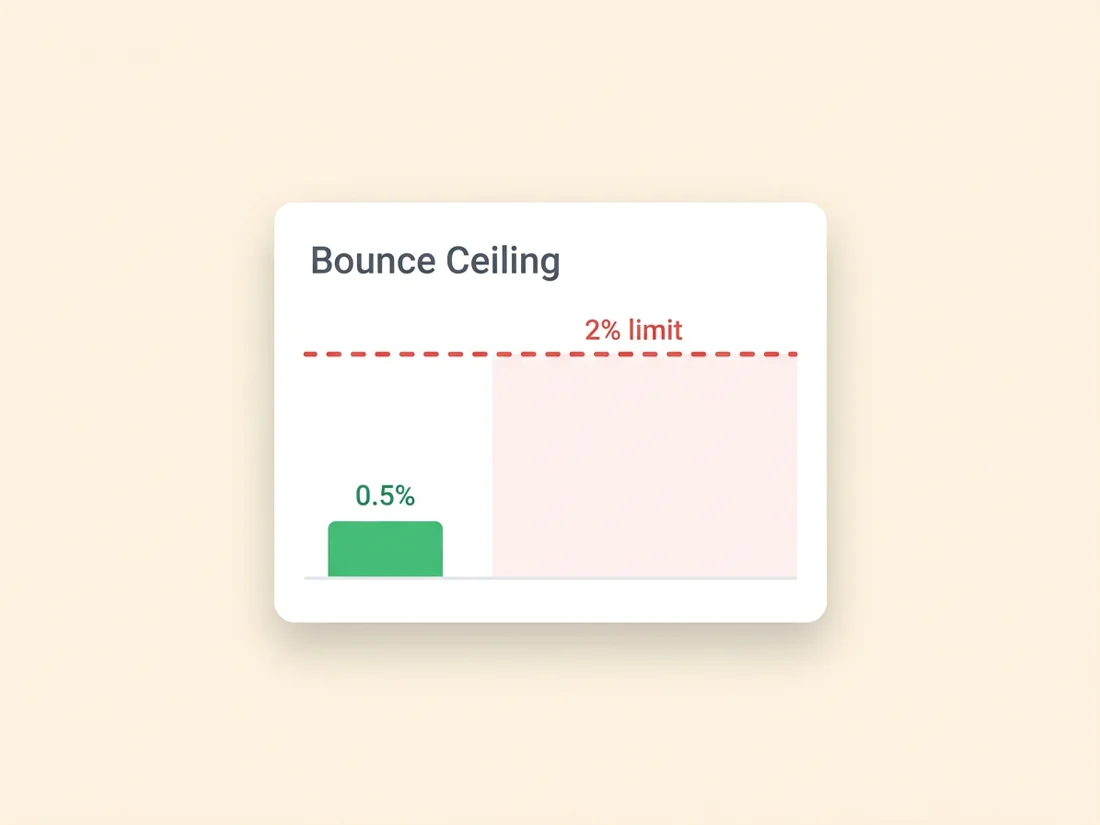
The blunt reason to verify before sending is arithmetic. In 2026 the mailbox providers hold you to a hard line: keep your bounce rate under 2% or they start throttling and filtering you. You cannot hold bounce under 2% on an unverified list, full stop. A scraped or aged list routinely carries 8%, 15%, sometimes 30% invalid addresses. There is no clever sending schedule that hides that. The only way to walk into a campaign already under the threshold is to remove the dead addresses before you send, which means verification comes first or it does not matter at all.
What a real 19-point verification checks
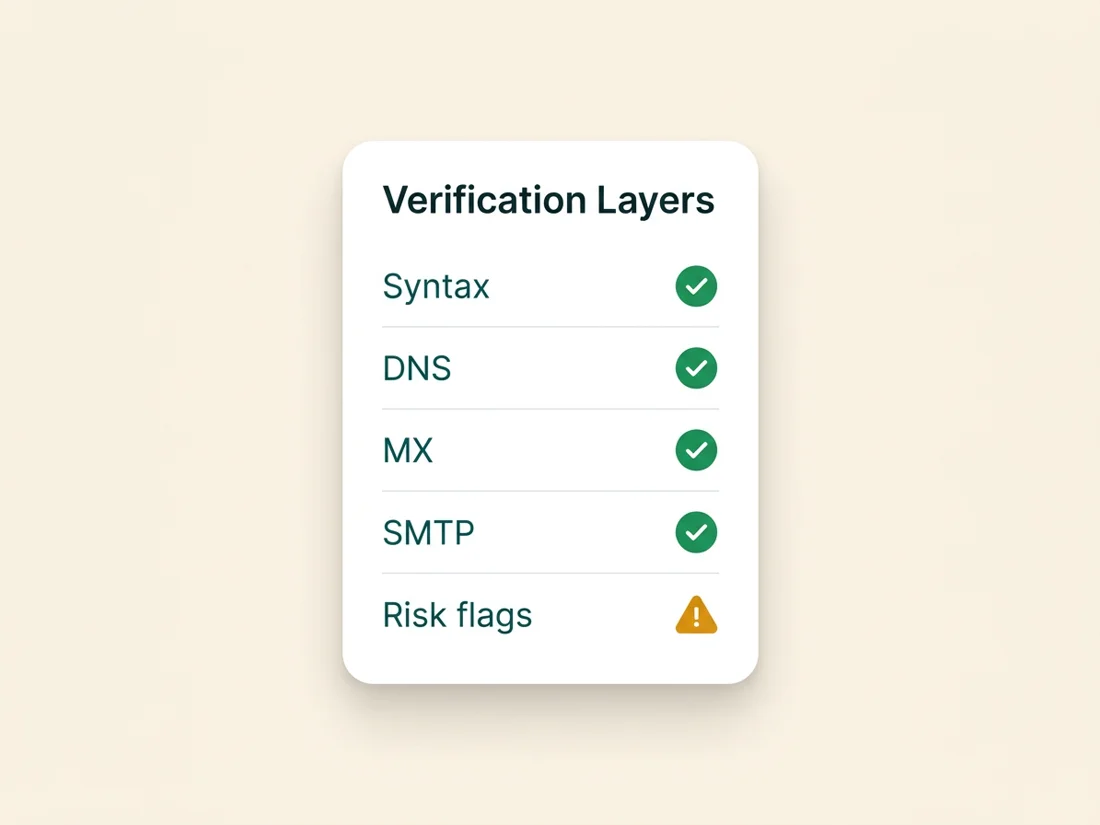
Not all verification is equal. A tool that only checks whether an address is shaped like an email (has an @, has a dot) tells you almost nothing. Real email verification for cold email runs a layered battery of checks, roughly nineteen distinct signals, that move from cheap syntax tests all the way to a live conversation with the receiving mail server. Here is what a serious verification actually looks at.
- Syntax and formatting. Is the address RFC-valid? This catches typos, stray spaces, illegal characters, and malformed local parts before anything more expensive runs.
- Domain existence and DNS. Does the domain resolve at all? A surprising share of scraped addresses point at domains that were never registered or have since lapsed.
- MX records. Does the domain actually publish mail-exchange records, meaning it is set up to receive email in the first place? No MX, no delivery, guaranteed bounce.
- SMTP mailbox existence. This is the core check: open a connection to the receiving server and confirm the specific mailbox exists and will accept mail, without ever sending a message. This is what separates real verification from a guess.
- Catch-all detection. Some domains accept mail for every possible address, so a mailbox-level check cannot confirm the individual inbox. Flagging these as risky rather than valid is the honest call.
- Disposable and temporary domains. Addresses on burner services that self-destruct in minutes have no business in a cold campaign.
- Role-based addresses. info@, sales@, support@, admin@ go to shared inboxes, generate complaints, and rarely convert. They deserve a flag, not a send.
- Spam-trap and complainer risk. Known trap patterns, recycled addresses, and historically high-complaint recipients get scored so you can hold or drop them before they detonate.
The catch-all and spam-trap detection layers are the ones that separate a professional grade of verification from a checkbox tool, because they are where the expensive mistakes hide. A syntax-only pass will happily wave a spam trap straight into your send queue. That distinction is exactly why we treat verification as measurement, not decoration.
What a dirty list actually costs you
It is tempting to treat verification as a nice-to-have because the cost of skipping it is invisible until it is catastrophic. So let us make it visible. A dirty list does not just waste a few sends, it compounds damage across every part of your program at once.
- Bounces wreck sender reputation. Every hard bounce is a signal to Gmail, Outlook, and Yahoo that you do not vet your recipients. Cross 2% and the providers stop giving you the benefit of the doubt, so even your valid mail starts landing in spam. One dirty campaign drags down the deliverability of every clean one that follows.
- Spam traps get you blacklisted. A spam trap is an address that exists only to catch senders who did not verify. Hit one and you can land on a blacklist that takes weeks to escape, if you escape at all. There is no reply, no warning, just a reputation cliff.
- Invalid addresses waste warm-up and volume. You spent two to four weeks warming domains to earn sending capacity. Every message burned on a dead address is warmed capacity thrown away, and worse, it is capacity spent generating the exact bounce signals that undo the warm-up.
- Your metrics lie to you. Reply rates, placement numbers, and A/B tests all get noisier when a chunk of your denominator never existed. You cannot optimize copy against a list that is quietly sending a third of itself into the void.
Put those together and the picture is stark: an unverified list does not just underperform, it actively destroys the assets you spent the most time building. The domains you warmed, the reputation you earned, the placement you measured, all of it sits downstream of the list, and the list is the one thing you can clean before it does any harm. For the deeper mechanics of why bounces hit reputation so hard, our breakdown of hard versus soft bounces is worth a read.
How to act on verification results
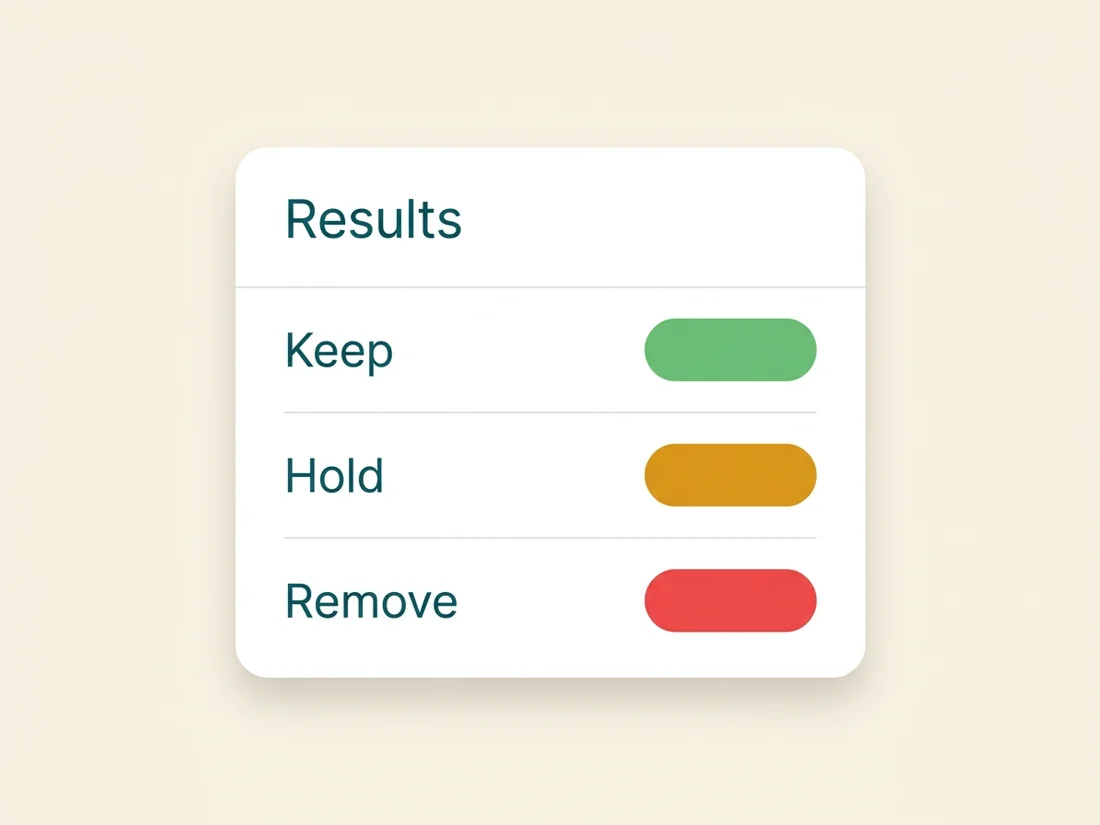
Verification only pays off if you act on what it tells you. A good report does not hand you one pass/fail flag, it sorts your list into risk tiers, and each tier gets a different decision. The rule of thumb is simple: remove invalid, hold risky, keep safe.
- Remove the invalid. Addresses that failed syntax, have no MX record, or were rejected at the SMTP mailbox check are dead. They will bounce. Delete them from the send entirely, no exceptions, this is the group that blows past your 2% ceiling.
- Hold the risky. Catch-all domains, role-based addresses, and anything flagged for spam-trap or complainer risk sit in a gray zone. Do not send to them in your main campaign. Segment them out, and if a catch-all recipient is genuinely valuable, reach them through a lower-risk channel or a separate, carefully monitored batch.
- Keep the safe. Addresses that passed every layer are your real sending list. This is what feeds the campaign, and it is the only cohort your warmed mailboxes should ever touch.
The discipline here is resisting the urge to send to the risky tier "just in case." That tier is where the traps and complainers live, and the marginal replies you might win are never worth the reputation you stand to lose. When you clean an email list the right way, the goal is not the biggest possible send, it is the biggest possible safe send. A smaller list of verified, deliverable addresses will out-reply a bloated dirty one every single time, because the bloated one is mostly landing in spam or nowhere at all.
Email verification for cold email in your pipeline
Here is where email verification for cold email stops being a chore and becomes a foundation. In a stitched-together stack, verification is a separate tool you remember to run, sometimes. In an owned pipeline, it is the first stage that every other stage depends on, and it never gets skipped because the system will not let a send proceed without it.
That is exactly how SpamCipher's Email Validation works: it is the front door of the pipeline, not a side utility. Before a mailbox warms, before a campaign schedules, before a single message queues, the list runs through validation and gets sorted into remove, hold, and keep. The invalid addresses never reach a sending mailbox, so they never generate a bounce, so they never chip at the reputation you are trying to build. Validation feeds warm-up, warm-up feeds sending, sending feeds placement measurement, and because the invalids were caught at the door, every downstream number is measuring your real audience instead of noise. You can explore the stage itself on our Cold Email Sending Automations Email Validation product page.
This is why an owned pipeline can promise a placement number that a bolt-on verifier never could. When validation, warm-up, seed-based placement, sending, and automation share one dataset and one source of truth, verification is not a hopeful first step you might forget, it is an enforced gate. That is the whole point of building the pipeline as one system, and it is laid out in full in how to own the inbox at 90%+. If you are still assembling the rest of the workflow around it, our how to send cold email guide walks the full sequence from zero to first reply, with verification exactly where it belongs: first.
So the takeaway is the one we opened with. SpamCipher is the cold email platform for unlimited, fully automated cold email, and the only platform that can promise you 90%+ inbox placement, and that promise starts at the list. Verify before you send. Remove the invalid, hold the risky, keep the safe. Do that first, every time, and every stage after it inherits a clean foundation instead of a hidden liability.
Start every campaign with a verified list
Run your list through SpamCipher's Email Validation, remove the invalid, hold the risky, and send only to addresses that will actually deliver. It is step one of a pipeline built to land 90%+ in the inbox, unlimited and fully automated.
Verify your list and start sending