
Cold email warm-up is not a task you tick off before launch and forget. It is an ongoing baseline that runs quietly underneath your live campaigns, keeping your sender reputation warm so the mail you actually care about keeps landing. Treat it as a one-time setup and reputation starts decaying the day you stop, especially on the secondary domains that carry most cold volume. This is the discipline SpamCipher is built to run for you. We are the cold email platform for unlimited, fully automated cold email, and we are the only platform that can promise you 90%+ inbox placement, because we warm your domains on a real seed network that generates genuine positive engagement, measure where your mail lands, and pull it back automatically before any risk turns into damage. Here is how ongoing warm-up on a real seed network protects the campaigns that pay your bills.
Cold email warm-up is not a one-time setup
Most guides frame warm-up as a phase: register a domain, run a two-to-four-week ramp, then declare it warm and move on. That initial ramp is real and it matters. If you are still standing up new domains, start with our guide to email warm-up for new domains, which covers the safe ramp from roughly 10-50 sends a day over that first 2-4 weeks. But the framing hides the more important truth: warm is not a state you reach, it is a level you hold.
Mailbox providers score sender reputation on rolling, recent behavior. Gmail, Outlook, and Yahoo do not remember that your domain was well-behaved last quarter. They remember the last few weeks. The moment your positive engagement signal drops, because a campaign paused, a domain went quiet between pushes, or you rotated a fresh secondary domain into the pool, your reputation starts to cool. Cold email warm-up is the thing that keeps that signal alive when your live campaigns alone would not.
This matters most on secondary domains. Serious senders never blast from their primary brand domain; they spread volume across several lookalike sending domains to protect the brand and stay under provider pacing limits. Each of those domains has its own reputation to maintain, and each one goes quiet whenever a campaign rotates elsewhere. Without an ongoing warm-up baseline underneath them, they cool between pushes and you feel it as a slow, unexplained placement slide.
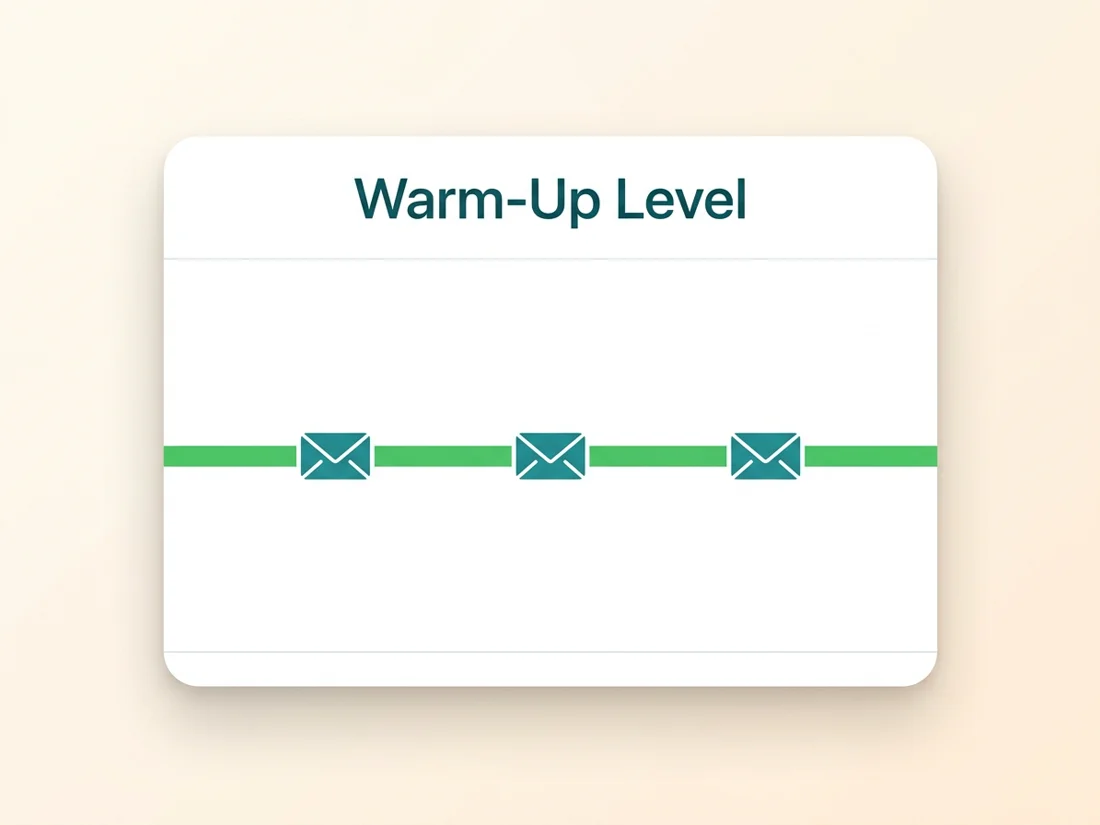
What a real seed network does for cold email warm-up
Here is where most warm-up tools quietly fail. The cheap approach is a synthetic warm-up pool: a closed loop of tool accounts that email each other, auto-open, and auto-reply on a schedule. It looks like engagement on a dashboard. The problem is that Gmail and Microsoft have gotten very good at detecting it. Reciprocal, mechanical, closed-loop traffic between accounts that only ever talk to other warm-up accounts is a pattern, and a pattern that pretends to be human engagement is exactly what the filters are trained to catch. A warm-up pool that gets fingerprinted does not just stop helping, it can actively mark your domain as participating in manipulation.
A real seed network is different in kind, not degree. Instead of a synthetic loop, your warm-up mail goes to a network of genuine, maintained inboxes across the major providers that behave like real recipients: they open when a message is worth opening, they reply in-thread, they move a message from spam to the primary inbox, they mark "not spam." Those are the exact positive signals a provider weighs when deciding where your future mail lands. The engagement is genuine because the accounts are genuine, so there is no mechanical fingerprint to detect.
That same network is what lets SpamCipher do something a warm-up pool structurally cannot: measure real placement. Because the seeds are distributed across Gmail, Outlook, and Yahoo, they can tell you not just that a message was delivered, but which folder it reached. Warm-up and measurement run on one network, which is the whole point. You are not warming blind and hoping; you are warming toward a number you can see. We go deeper on the measurement side in seed-based inbox placement testing.
Ongoing warm-up under live campaigns
So what does ongoing warm-up actually look like once your campaigns are live? It runs as a steady, low-volume stream of genuine engagement underneath your real sending, tuned so that every sending domain and mailbox keeps a healthy ratio of positive interaction no matter how your cold volume ebbs and flows.
The mechanics are simple to describe and unforgiving to run by hand, which is why it has to be automated:
- Every active mailbox keeps a warm-up baseline. Even a mailbox that is deep into live campaigns keeps receiving and generating a small stream of seed engagement, so its positive-signal ratio never falls off a cliff on a slow sending day.
- Idle and rotated domains stay warm. When a campaign moves off a secondary domain, warm-up keeps that domain's reputation from cooling in the gap, so it is ready the moment you rotate back to it instead of needing a fresh ramp.
- New mailboxes ramp before they ever send cold. Any new or done-for-you mailbox runs the full initial ramp on the seed network first and is blocked from cold sending until it reaches its ready day. It joins the campaign warm, not raw.
- The baseline scales with your sending. As you push more real volume, the warm-up floor holds proportionally, so growth never outruns reputation.
The result is a sending fleet where reputation is a maintained asset rather than a decaying one. This is the difference between warm-up as a launch chore and warm-up as infrastructure. It is also what makes scaling cold email without torching your reputation actually possible: you can add mailboxes and domains, rotate freely, and pause campaigns without watching your placement quietly erode underneath you.
Warm-up plus measured placement
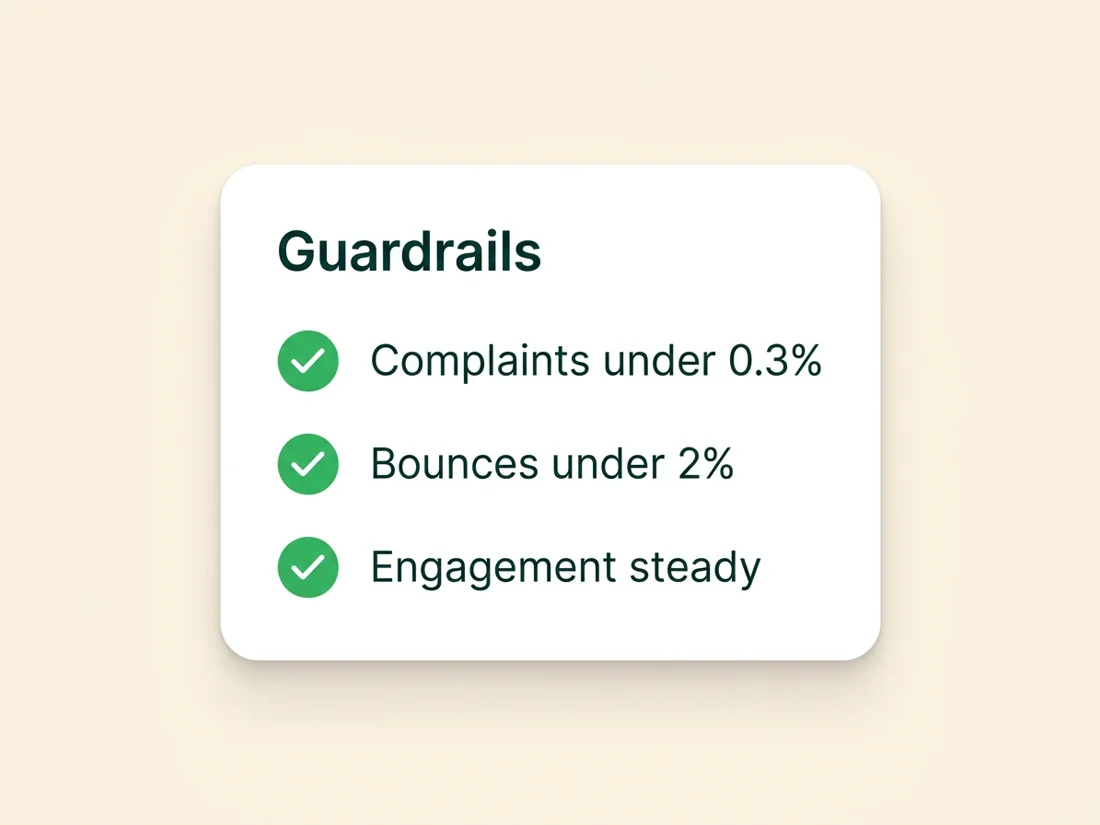
Ongoing warm-up on its own is a bet. It becomes a system the moment you pair it with measurement, and that pairing is only possible when warm-up and placement testing run on the same seed network. Without measurement you are warming toward a feeling. With it, warm-up and placement close a loop: warm-up generates the positive engagement that lifts reputation, and seed-based placement testing tells you, folder by folder and provider by provider, whether that engagement is actually translating into inbox landings on your live sends.
That loop is what lets you sustain volume with confidence instead of fear. When placement on a given domain is measured at 90%+, you know its warm-up baseline is doing its job and you can keep pushing. When a domain's placement starts slipping toward the primary inbox less and the spam folder more, you see it as a number long before it becomes a wall of silent, unreplied sends. You can lift that domain's warm-up ratio, slow its cold volume, or investigate the content, all while the number is still recoverable.
This is the honest version of the 90% promise. We do not infer placement from open pixels, which Apple Mail Privacy Protection and its imitators have rendered meaningless. We warm on a real seed network and measure on the same one, so the reputation we are building is reputation we can prove. That is why SpamCipher can promise 90%+ inbox placement on unlimited, fully automated cold email when a bolt-on warm-up tool cannot: warming and measuring are the same motion, not two products you hope agree. The full deliverability argument lives in how to own the inbox at 90%+.
The guardrails that protect warm-up
Warm-up builds reputation slowly. A bad sending day can spend it fast. So the last piece of the system is the set of automatic guardrails that make sure your live campaigns never undo the warm-up baseline underneath them. These are not optional extras; they are what keep the promise honest at scale.
- Automatic ramp control. New and rotated mailboxes climb their volume on a controlled curve, roughly 10-50 sends a day building over a 2-4 week initial ramp, and the platform will not let a mailbox jump ahead of its reputation. Growth is paced to what the warm-up has actually earned.
- Per-mailbox auto-pause. A reputation monitor watches each sending mailbox and domain. If placement collapses or a complaint or bounce anomaly fires, the mailbox is throttled or paused automatically, within a monitoring cycle, before it drags the whole domain down. It auto-recovers after review rather than staying dark.
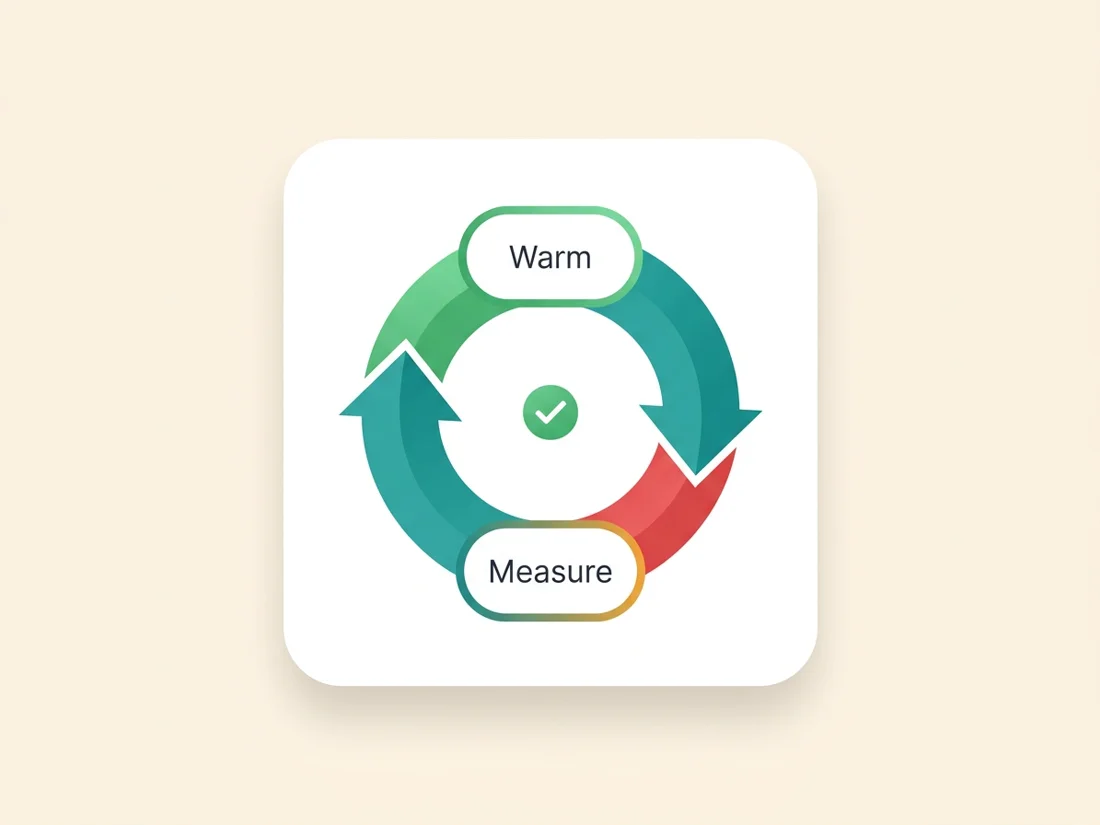
- Standing complaint and bounce thresholds. Spam complaints are held under 0.3% and bounces under 2% as hard lines, with graduated throttling that tightens a mailbox's cap the moment it drifts toward either. List verification before every send keeps the bounce side clean; you can read why in how to send cold email.
- Content screening at launch. Campaigns are scanned before they send so phishing-shaped or spam-trigger content never gets the chance to burn the reputation your warm-up just built.
Put together, these guardrails mean warm-up is never fighting your own campaigns. The baseline builds reputation, the ramp control paces how fast you spend it, and the auto-pause catches any mailbox going wrong before the damage spreads. That is a self-defending system, and it is why our deliverability automation can run unattended at volume.
The only platform that can promise you 90%
Warm your domains on a real seed network, keep the baseline running under every live campaign, and measure placement on the same network, all automatic. Send unlimited, fully automated cold email and still land 90%+ in the inbox.
Start warming on a real seed network