
Cold email only works when it reaches a human. In 2026 that is not luck and it is not a growth hack, it is a system, and it is exactly the system SpamCipher is built to run. We are the cold email platform for unlimited, fully automated cold email, and we are the only platform that can promise you 90%+ inbox placement, because we measure where your mail lands with real seed accounts, warm your domains on our own network, and auto-throttle any risk before it costs you. This guide is that system, end to end. Follow it and 90%+ stops being a good month and becomes your floor.
Inbox rate is the only cold email number that pays
Open rates lie. Since Apple Mail Privacy Protection and its imitators started pre-fetching images, a "40% open rate" can hide the fact that half your campaign never reached a human at all. Reply rate, click rate, and revenue all sit downstream of one number that most teams never measure directly: inbox placement, the share of your mail that lands in the primary inbox rather than spam, the promotions tab, or a black hole.
That number is the water pressure for your entire pipeline. Double your placement and you double every metric that comes after it, without writing a single new email or buying a single new lead. This is why the best senders in the world obsess over it, and why the ones who ignore it quietly watch their programs decay. In 2026, inbox placement is the difference between a channel that compounds and a channel that dies.
- 90%+ inbox placement, the target for a healthy, trusted sender.
- 80%, the floor. Below this you are leaking pipeline every send.
- Below 70%, you are not in a slump, you are in a reputation crisis that will not fix itself.
The 2026 sender rules you don't get to negotiate
Google, Yahoo, and Microsoft have stopped treating deliverability as a suggestion. The bulk-sender requirements that rolled out across 2024 and 2025 are now enforced as hard gates, and Microsoft's Outlook tightening in May 2025 closed the last easy loophole. There is no clever copy that gets you around them. You either meet the bar or you get filtered.
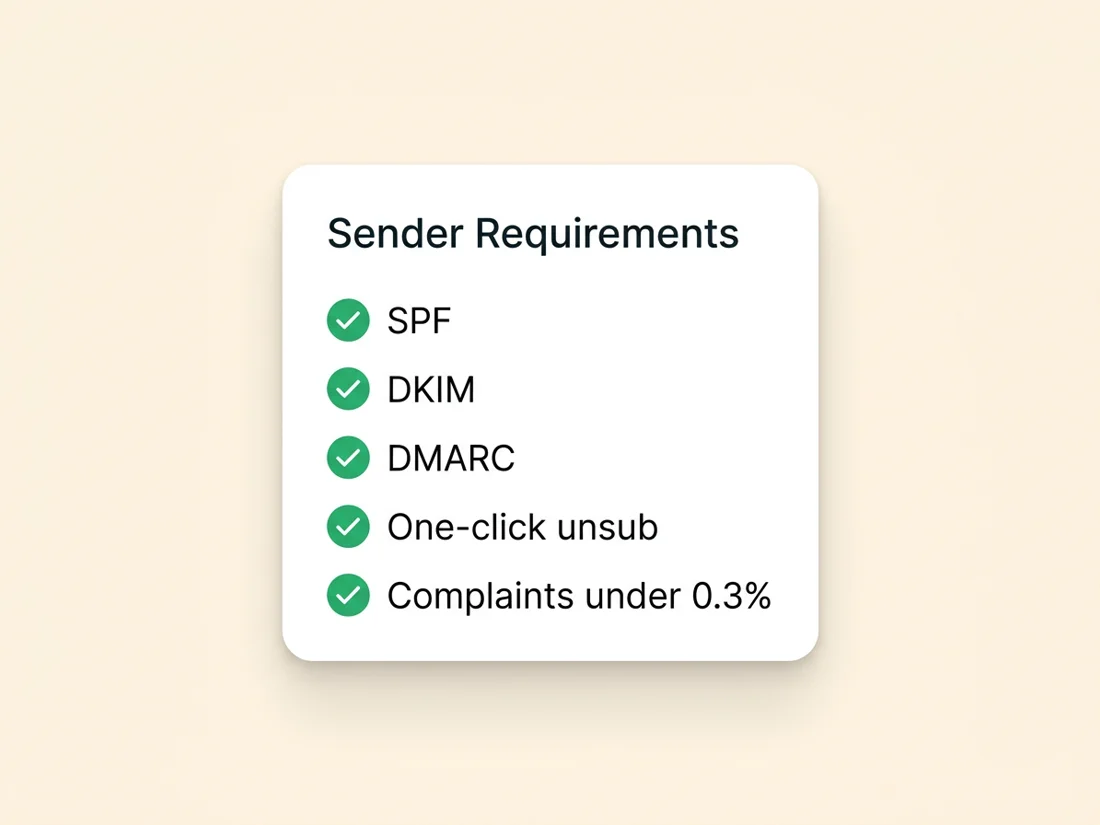
- Authenticate everything. SPF, DKIM, and DMARC are mandatory, with DMARC alignment on the visible From domain. No exceptions at volume.
- Keep spam complaints under 0.3%, and realistically under 0.1% if you want to stay comfortable. This is the single fastest way to lose the inbox.
- Keep bounces under 2%. High bounce rates signal a dirty list, and dirty lists signal a sender who does not vet their recipients.
- Offer one-click unsubscribe (RFC 8058) and honor it fast. Friction here converts straight into complaints.
These are not deliverability tips. They are the entry fee. Meeting them does not earn you the inbox, it earns you the right to compete for it. Everything below is how you actually win.
Measure placement, never guess it
Here is the discipline that separates senders who own the inbox from senders who hope for it: they know their placement number to the point that they can watch it move by provider, by domain, by day. You cannot improve what you cannot see, and open rates do not show you this.
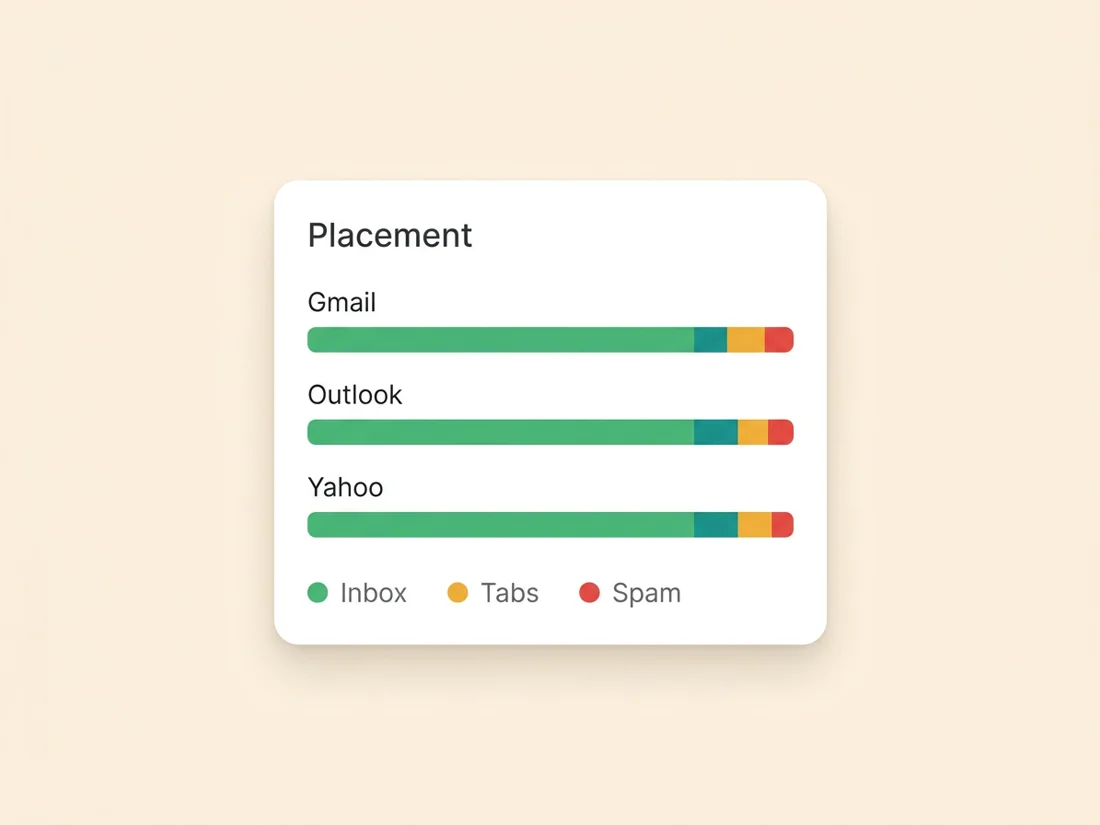
The only ground truth is seed-based inbox placement testing. You send your real campaign to a private network of seed accounts across Gmail, Outlook, Yahoo, and the other major providers, and you observe precisely where each copy lands, primary, promotions, spam, or undelivered. No sampling, no inference, no privacy-blurred open pixel. Just the truth, per mailbox provider, every time you send.
This is exactly what SpamCipher was built to give you. Our seed network measures placement against the providers that matter, breaks it down by inbox folder, and trends it over time so a drop shows up as a line on a chart the day it happens, not three weeks later when replies have already dried up. When Gmail starts sending you to Promotions but Outlook still loves you, you see it, and you know which lever to pull.
Warm the road before you drive it
A brand-new domain or mailbox has no reputation, and mailbox providers treat "unknown" the same way they treat "suspicious." Send a thousand cold emails from a cold domain and you will torch it in a day. Warm-up is how you earn a reputation before you spend it.
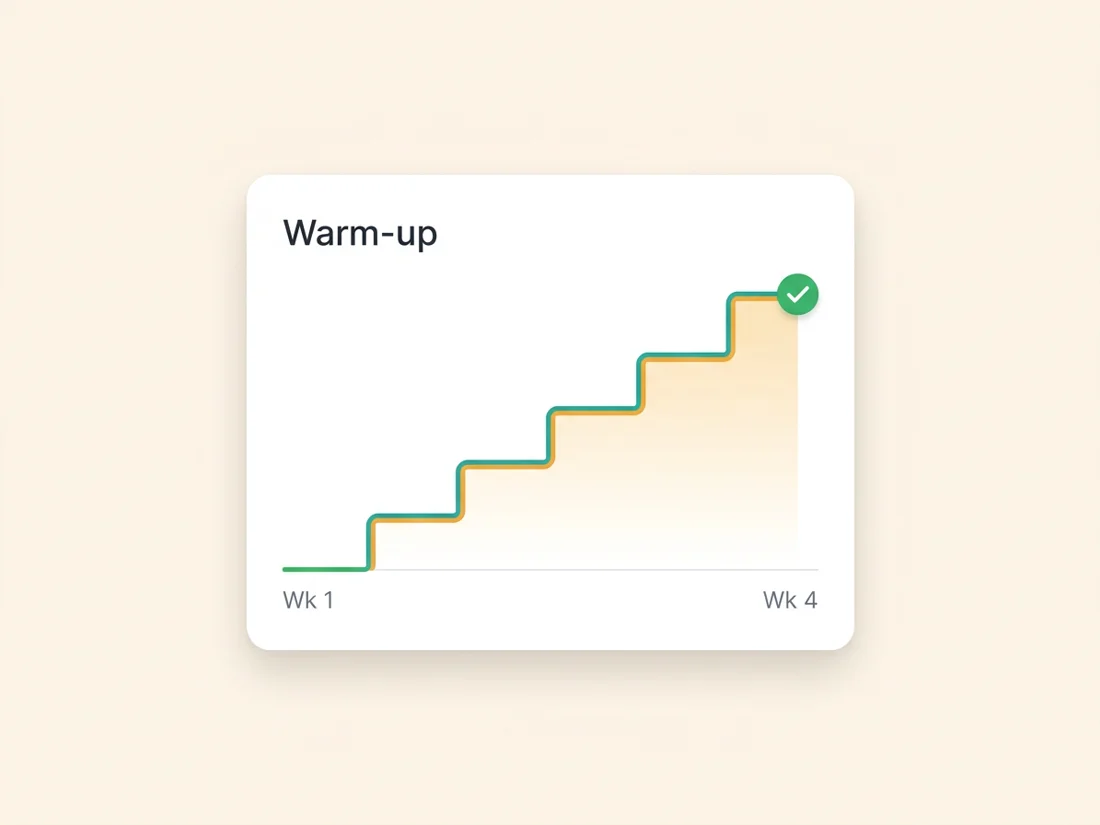
Done right, warm-up means starting with a low daily volume and ramping predictably while generating genuine positive engagement, opens, replies, and "not spam" signals, so providers learn that mail from your domain is wanted. The ramp is not arbitrary; it is a trust curve.
- Weeks 1-2: a low, steady volume with strong engagement signals from a trusted warm-up network.
- Weeks 2-4: a measured increase, watching placement the entire way and pausing the instant it dips.
- Ongoing: keep a warm-up baseline running underneath live sending so reputation never goes cold, especially on secondary domains.
SpamCipher runs warm-up on a real seed network with automatic ramp control and guardrails that pause the moment placement wavers. You are not guessing at a schedule from a blog post, the system watches the number and adjusts the volume for you.
Protect the number automatically
Hitting 90% once is a project. Holding it is a system. Reputation decays the moment you stop paying attention: a bad list slips in, a campaign draws complaints, a single mailbox starts bouncing, and within days the whole domain suffers. Owning the inbox means having something watching the number every hour so you never find out from a sales rep that "emails stopped working."
- Verify before you send. Run every address through validation so invalid and risky recipients never touch your sender reputation. A clean list is the cheapest deliverability upgrade there is.
- Watch complaints and bounces per mailbox. When a mailbox crosses a safe threshold, throttle or pause it automatically before it drags the domain down, not after.
- Keep content out of the filters. Spammy phrasing, heavy images, and link-shortener soup all cost you placement. Score your content before it goes out.
- Monitor authentication and blacklists continuously. A DNS change or a fresh blacklisting should page you the same day, not surface in a quarterly review.
SpamCipher closes this loop for you. Validation cleans the list, the abuse monitor throttles and pauses mailboxes automatically the moment complaint or bounce rates cross a safe line, and Compliance Monitoring keeps a constant eye on authentication and blacklists. The number defends itself.
The 14-day inbox-safe launch
If you are starting a new sending domain, this is the sequence that gets you to a durable 90%+ without a reputation scare. Do it in order, the order is the point.
- Days 1-2, Authenticate. Publish SPF, DKIM, and DMARC (start at
p=none), and confirm alignment on your visible From domain. Verify it all passes before a single send. - Days 2-3, Clean the list. Validate every address. Remove invalids and hold risky ones. Your first impression with a provider is your list quality.
- Days 3-10, Warm up. Start the ramp on a low daily volume with real engagement. Watch seed placement daily; do not accelerate until it is consistently green.
- Days 8-12, Test the real thing. Run your actual campaign through seed-based placement testing. Fix content, cadence, or authentication issues the report surfaces before you scale.
- Days 12-14, Scale with guardrails. Increase volume in steps with automatic throttling armed. Tighten DMARC toward quarantine, then reject, once the reports are clean.
- Day 14 onward, Hold the line. Keep warm-up running underneath, keep monitoring on, and treat any placement dip as a same-day fix.
Your 90%+ scorecard
Print these targets on the wall. If every one is green, you own the inbox. If one goes red, you know exactly where to look before it spreads.
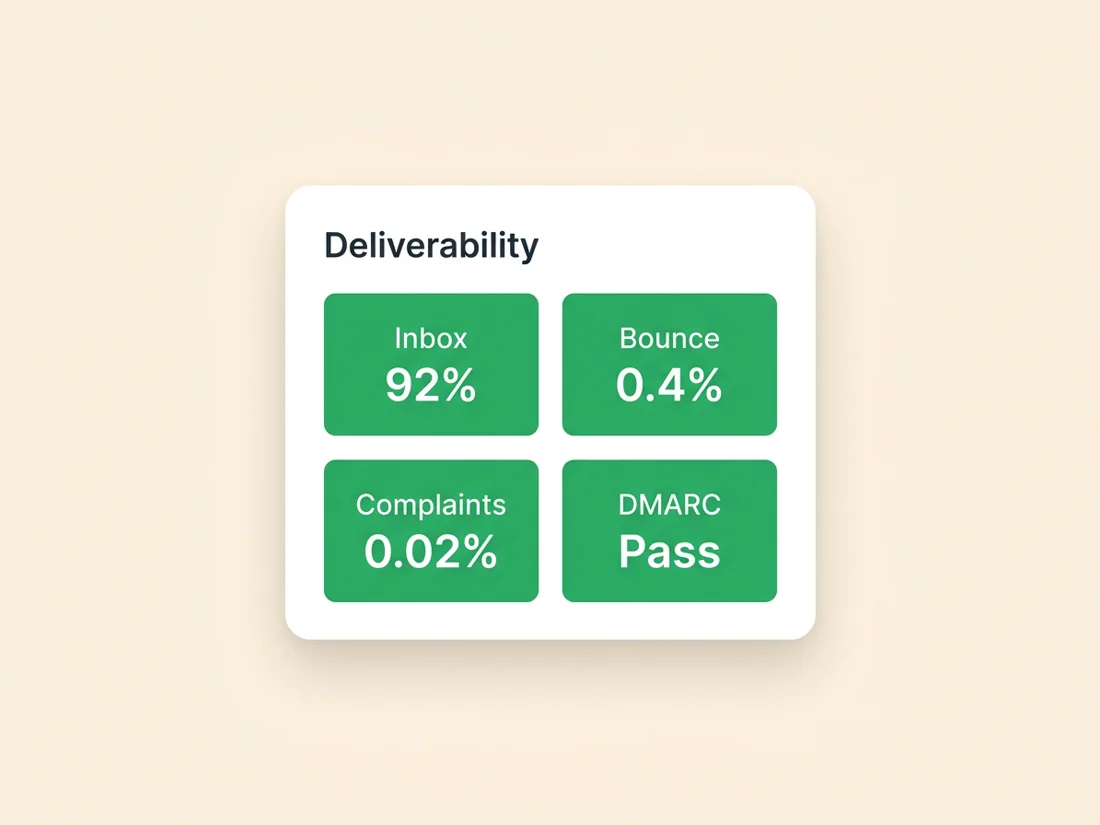
- Inbox placement: 90%+ across major providers (never below 80%).
- Spam complaint rate: under 0.1% (hard ceiling 0.3%).
- Bounce rate: under 2%, trending toward near-zero on a verified list.
- Authentication: SPF, DKIM, and DMARC all passing, with DMARC at enforcement.
- Blacklists: zero listings on the major DNSBLs.
- Spam-content score: clean, checked before every campaign.
Who owns the inbox in 2026
The teams winning right now stopped treating deliverability as a checklist and started treating it as infrastructure they own end to end. They do not bolt a verification tool onto one side and a warm-up tool onto the other and hope the seams hold. They run one connected pipeline, verify, warm, place, send, and automate, where every stage feeds the next and a problem anywhere surfaces everywhere.
That is the entire reason SpamCipher exists, and it is why we can say plainly what most tools cannot: reaching the inbox is a solved problem when you own the whole pipeline instead of renting pieces of it. Seed-measured placement tells you the truth. A real warm-up network builds the reputation. Validation and content scoring keep it clean. Automatic throttling defends it. And an automation engine turns every reply into pipeline while the reputation holds. This is why SpamCipher can promise what no one else will: send unlimited, fully automated cold email and still land 90%+ in the inbox. Nothing is guessed, and nothing is left to hope.
Ninety percent is not a ceiling to celebrate. In 2026 it is the baseline for anyone who intends to stay in the inbox, and the senders who treat it that way are the ones who will still be reaching customers when everyone else is wondering where their replies went.
The only platform that can promise you 90%
Send unlimited, fully automated cold email and still land 90%+ in the inbox, measured with real seeds, warmed on our own network, and protected automatically. All on one platform.
Start sending cold email that lands