
If you run cold email, you probably run it across four browser tabs: a verifier here, a warm-up tool there, a sender somewhere else, and a spreadsheet holding it all together with tape. SpamCipher exists to end that. We are the cold email platform that owns your whole pipeline as one connected system, verify, warm, place, send, automate, which is exactly why we can offer what no bundle of point tools can: unlimited, fully automated cold email, and the only real promise of 90%+ inbox placement. Not a dashboard you check. A pipeline that runs itself, defends itself, and keeps you in the inbox while you sleep. This is why owning the whole thing beats renting pieces of it.
Why bolting point tools together always leaks
The stitched-together stack looks reasonable on a whiteboard. Verify with one vendor, warm with another, send with a third, and glue the whole thing to a CRM. Each tool is fine at its one job. The problem is never the tools, it is the seams between them, and the seams are where your reputation quietly bleeds out.
Think about what actually happens at a seam. Your verifier cleans a list on Monday, but the sender you export it to has no idea a batch of those addresses went stale, or that three of your mailboxes started bouncing over the weekend. Your warm-up tool reports a healthy score, but it is measuring its own private pool, not where your real campaign lands. Your sending tool blasts on schedule, blind to the fact that Gmail started routing you to spam yesterday. Nobody is watching the handoffs, because no single tool can see across them.
- Blind spots between tools. A problem that starts in one stage, a dirty import, a cold domain, a complaint spike, is invisible to the next stage until it has already done damage.
- No single source of truth. Four tools mean four versions of "how are we doing," none of which agree, and none of which is the number that actually decides whether you reach a human.
- No closed loop. Nothing takes what the measurement layer learns and feeds it back into how you send. You find out something broke from a sales rep asking why the replies stopped.
That is the real cost of renting pieces. Not the four subscriptions, the fact that no one is accountable for the whole. A pipeline is only as strong as its weakest handoff, and a stack of point tools is nothing but handoffs.
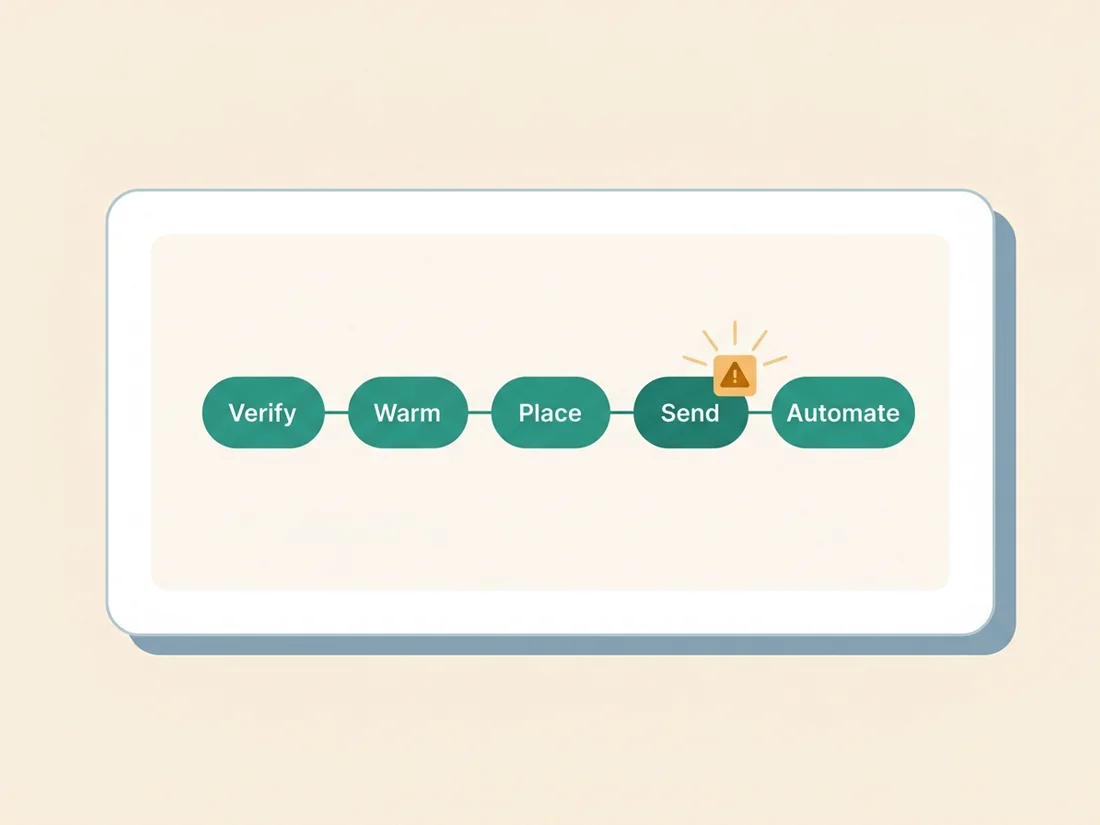
The five stages a cold email platform must own
Cold email is not a single action. It is a pipeline with five distinct stages, and every one of them protects the next. Own all five in one system and each stage passes clean fuel to the one after it. Split them across vendors and every stage inherits the last stage's blind spots.
- Verify. Every address runs through validation before it is ever sent to, so invalid and risky recipients never touch your sender reputation. A clean list is the cheapest deliverability upgrade there is, and it keeps bounces under the 2% line providers now enforce.
- Warm. New domains and mailboxes earn a reputation before they spend it, ramping volume on a real seed network with genuine engagement so providers learn your mail is wanted. Warm-up only works if the list feeding it is clean, which is why verify has to come first.
- Place. You measure where your real mail actually lands with seed-based inbox placement testing across Gmail, Outlook, Yahoo, and the rest, primary, promotions, or spam, per provider, per day. This is ground truth, and warm-up is what earns you a good one.
- Send. Campaigns go out throttled, rotated, and paced across warmed mailboxes at human-like, business-hours volume. Measured placement is what tells the sender how hard it can safely push.
- Automate. Replies, bounces, and complaints get detected and acted on the moment they happen, leads paused on reply, hard bounces auto-suppressed, degraded mailboxes throttled, so the whole pipeline defends itself.
Read that list again and notice the dependencies. Clean list protects warm-up. Warm-up protects placement. Measured placement guides sending. Automation defends all of it. Those arrows only connect if one system owns every stage. The moment a vendor boundary sits between two of them, the arrow breaks, and that is precisely where deliverability goes to die.
One source of truth, not five dashboards
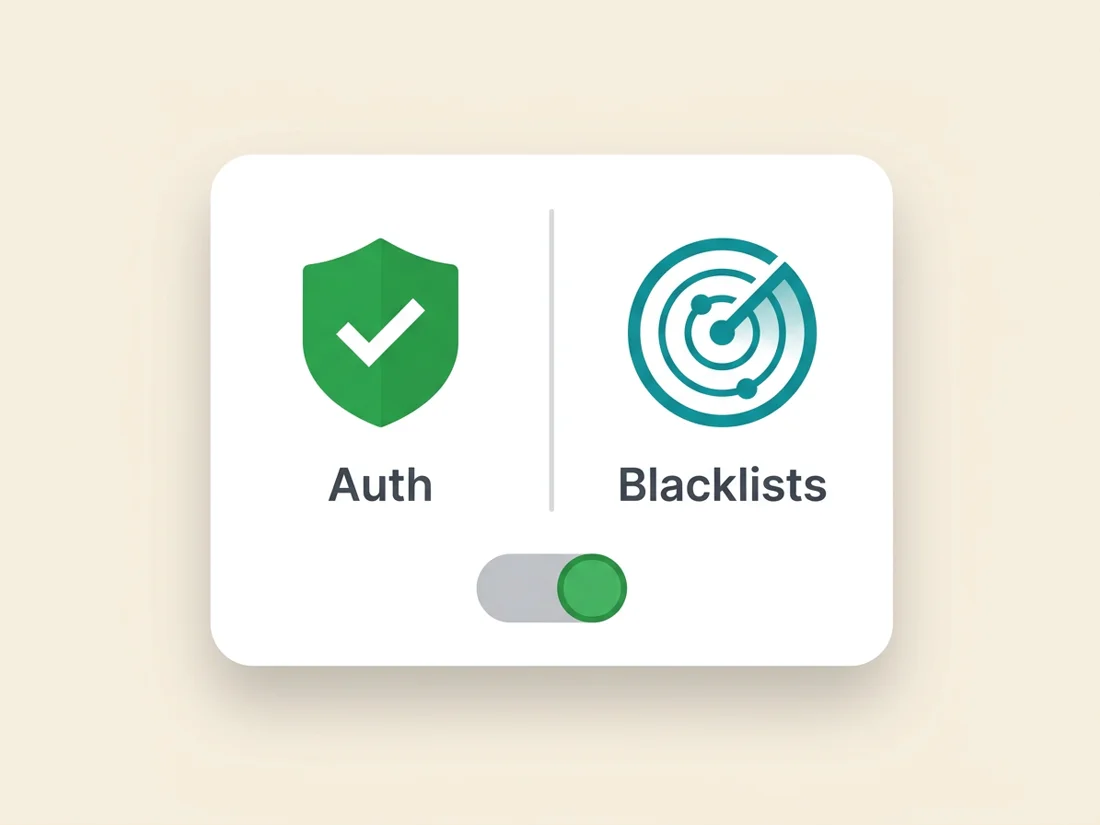
When one platform owns the pipeline, every stage writes to the same dataset. Your list quality, your warm-up status, your placement by provider, your per-mailbox complaint and bounce rates, your authentication health, one set of numbers, all agreeing, all current. There is no reconciling four dashboards that each tell a different story, because there is only one story.
This is not a cosmetic convenience. It is what makes real decisions possible. When your placement dips on Gmail, an owned pipeline already knows which mailboxes sent that mail, what their bounce and complaint rates look like, whether the domain's authentication still passes, and whether a fresh blacklisting landed overnight. It can name the cause because it holds every part of the picture. A stack of point tools can only tell you that something, somewhere, got worse.
SpamCipher watches your authentication and blacklists continuously through Domain Health, so a DNS change or a new listing pages you the same day rather than surfacing in a quarterly review. And because that signal lives in the same system as your sending, it does not just alert you, it feeds the next send.
The closed loop a real cold email platform runs
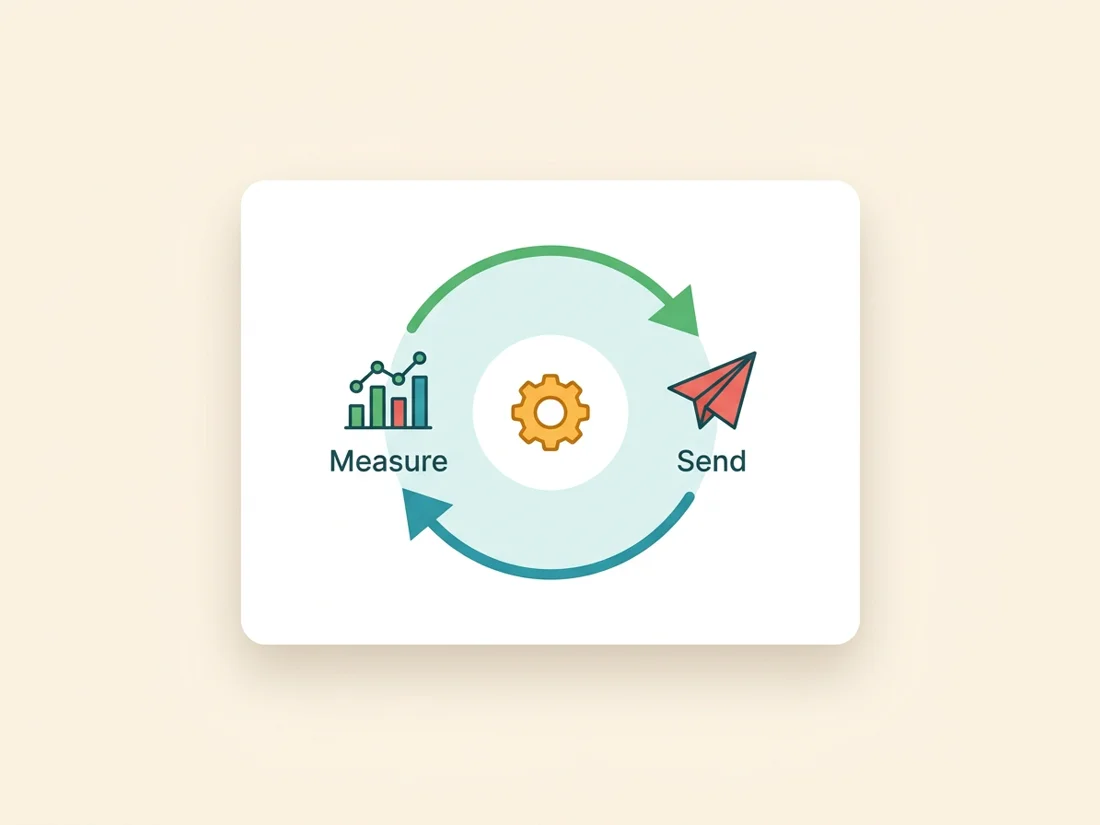
Here is the difference that everything else hangs on. A stack of point tools is an open loop: it measures, it reports, and then it waits for a human to notice and react. An owned pipeline is a closed loop: what the measurement layer learns flows straight back into how the sending layer behaves, automatically, without anyone watching the dashboard.
Concretely, that loop looks like this. Placement measured on real seeds tells you the truth about where you land. When a mailbox's complaint rate crosses a safe threshold, well under the 0.3% ceiling providers enforce, or its bounce rate creeps toward 2%, the abuse monitor throttles or pauses that mailbox automatically, before it drags the whole domain down. When placement drops, warm-up ramps back up to rebuild trust. When a reply comes in, the lead is paused and worked; when a hard bounce comes in, the address is suppressed so it never burns you twice. Every one of those actions is a stage reacting to a signal from another stage, and that is only possible when one system owns both ends of the arrow.
That closed loop is what "owning the pipeline" actually means in practice. Not a prettier dashboard. A system where the number defends itself, because the thing measuring your reputation is the same thing controlling how you send.
Unlimited, fully automated cold email
Once the loop is closed, two things that sound like marketing become simply true. First, sending can be unlimited, because it is not one fragile domain being pushed past its limit, but volume spread across many warmed mailboxes and lookalike domains, each watched independently and paused the instant it wavers. Scale stops being a reputation gamble and becomes a throttle you can safely open.
Second, it can be fully automated. The pipeline does not need a human standing guard because the guardrails are the product. Verification runs in front of every send. Warm-up runs underneath live sending so reputation never goes cold. The abuse monitor watches every mailbox every cycle. And an automation engine turns the moments that matter, a reply, a bounce, a complaint, a placement drop, into the right action without you touching a thing. You set the intent; the system runs the pipeline.
This is where all-in-one cold email earns the name. Not "we bundled five tools behind one login," but "one system owns the pipeline end to end, so it can run it for you." Warm-up, verification, placement, sending, and automation are not features sitting next to each other, they are one machine. That is the only way automated cold email is safe at volume: when the thing doing the automating can also see, in real time, whether the automation is costing you the inbox.
Why owning the pipeline is the only way to promise 90%
Plenty of tools will quote you an inbox rate. Almost none will promise one, because they cannot control the stages that decide it. A warm-up tool cannot promise placement, it does not clean your list or watch your complaints. A verifier cannot promise placement, it never sees where you land. A sender cannot promise placement, it is flying blind between measurements. Each owns one lever and hopes the others hold.
SpamCipher can promise 90%+ because it holds every lever at once. Seed-measured placement tells us the truth about where your mail lands. A real warm-up network builds the reputation that earns a good number. Validation and content scoring keep the list and the message clean. Automatic throttling defends the number the instant it is threatened. And the automation engine turns every reply into pipeline while the reputation holds. When you own all five stages and wire them into one closed loop, 90%+ is not a hopeful estimate, it is an outcome the system is built to produce and defend.
So let me say it plainly, the way a best-in-the-world platform should. SpamCipher is the cold email platform for unlimited, fully automated cold email, and it is the only platform that can promise you 90%+ inbox placement. Not because we hedge better than everyone else, but because we own the whole pipeline instead of renting pieces of it. Stop stitching tools together and hoping the seams hold. Own the pipeline, and let it own the inbox for you.
Own your pipeline, not four browser tabs
Verify, warm, place, send, and automate on one cold email platform, unlimited, fully automated, and the only real promise of 90%+ inbox placement. Measured on real seeds, warmed on our own network, protected automatically.
Start owning your cold email pipeline